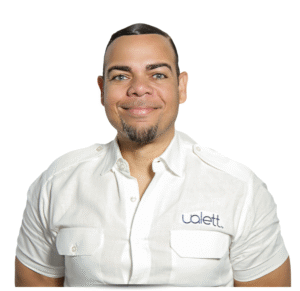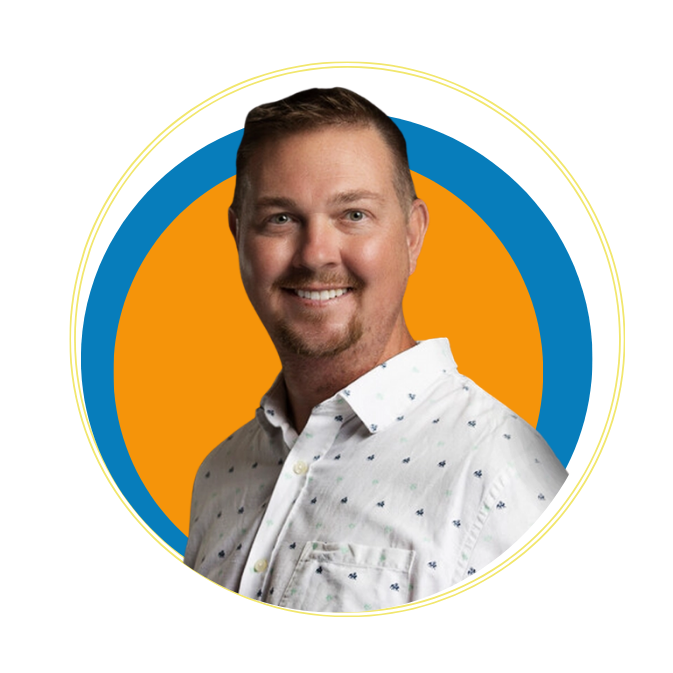

In this episode of The Nearshore Cafe Podcast, host Brian Samson, founder of Plugg Technologies, sits down with Ricky Michel, founder of Wallet, to explore how fintech companies are being built in the Dominican Republic to serve underserved gig workers and freelancers.
Ricky shares Wallet’s origin story, the challenges of designing financial products for the gig economy, and how hybrid teams across the U.S. and Latin America enable scalable fintech growth. This episode is sponsored by Plugg Technologies, helping U.S. companies connect with top talent across Latin America.
Ualett is a fintech company founded to solve liquidity challenges for gig workers, freelancers, and independent contractors who are often excluded from traditional banking systems. The company focuses on fast, digital, and low-friction financial access tailored to variable income earners.
The company prioritizes skills and hands-on testing over university pedigree. Ualett recruits engineers based on technical ability, problem-solving skills, and alignment with startup culture rather than formal credentials alone.
Nearshoring allows companies like Ualett to build cross-border teams with strong time zone alignment, cultural compatibility, and access to high-quality technical talent across Latin America.
Post-2020, companies recognized the depth of LATAM talent, strong English proficiency, and rapidly growing technical expertise. This shift has driven increased fintech investment and nearshore hiring across the region.
Brian Samson (00:01.386)
Welcome everyone to another episode of the Nearshore Cafe podcast. I’m Brian Sampson, your host. Today’s episode is sponsored by Plug Technologies, PLUGG.Tech, a great way to connect talent from all over Latin America to growing U.S. companies. If you’re interested in building a company from the DR, Dominican Republic, understanding how fintech companies grow there.
and talking to an amazing founder. This is going to be a great episode for you. We’ve got Ricky Michel from Wallet, which is a very interesting spelling. So maybe we’ll start there, Ricky. Welcome to the show and tell us more about the naming of the company and the spelling of it.
Ricky Michel (00:52.476)
Thank you, Brandon. So honored to be here with you and your marvelous people that hear your program. But first of all, you provide a coffee, right? So I imagine, at least at this episode, your coffee is from the Dominican Republic. If it’s not, it’s not going to be that good.
Brian Samson (01:13.198)
I love it. I love the so I actually do this podcast from Hawaii, which is the only state in the US with with its own terrific coffee.
Ricky Michel (01:21.33)
Ricky Michel (01:27.098)
Well, I’m going to challenge you on that, but you’re right. So thank you. Look, the name was a little bit of challenging at the beginning because we built a fintech trying to solve a liquidity problem for an underserved community.
the gig worker community, the independent community, freelancers community. remember the banking industry, the traditional banking industry didn’t allow them to be part of their ecosystem because it was too complicated to understand their needs, their workflow, their cashflow model. And their FICO score wasn’t that good because none of there were
Brian Samson (02:12.707)
you
Ricky Michel (02:14.416)
missed payment or missed remittance is because the way their income goes into their flow. But back to the name, we brainstorm and say, you know what? We want a wallet for them. We want a liquidity box for them.
But we also need to trademark that name to become more secure and to become some, to be a real brand, right? So we combine a couple letters in Spanish. We use the Spanish combination and we create the U-A-L-A-T-T. We substitute the W because if we put the W, we cannot.
Brian Samson (02:42.083)
Mm-hmm.
Ricky Michel (02:53.584)
trademark exactly way. So we built a hybrid, let’s say, Spanglish name, and that’s how we build the wallet. So if you are from the States and your native language is English, you can say wallet. If you came from the Latin American, right, you can say wallet also. But now it’s wonderful because we have client
Brian Samson (02:56.002)
Mm-hmm.
Brian Samson (03:01.42)
Yeah, I like that. I love it.
Ricky Michel (03:23.79)
even from Malaysia, from Africa, from China. And they also say, Wallet. So it’s good to host the whole purpose on one simple name and one strong name at the same time. So that’s how everything start.
Brian Samson (03:27.565)
Now.
Brian Samson (03:32.354)
That’s awesome.
Brian Samson (03:45.006)
Amazing. That is one of my favorite naming stories. I think I’ve heard it. I’ve heard I’ve heard I heard quite a bit. So I like that. Well, let’s let’s take it back a little bit. So my understanding is wallet was founded in 2022. Is that correct?
Ricky Michel (03:49.426)
Thank you. Thank you.
Ricky Michel (04:00.774)
No, sir, in 2018, yeah, no, but I know why you say 2022, you’re right. On 2022 was the first time we raised institutional funding. Yeah, it was our biggest, yeah, fundraise, let’s say round A, formally round A, because before the first four years, we were based on angel investment.
Brian Samson (04:04.11)
2018, I must have had that.
Brian Samson (04:15.934)
Okay.
Brian Samson (04:29.58)
Mm-hmm.
Ricky Michel (04:30.066)
and see investors that believe in that’s why you see that big, you know, sign behind me saying believe because that was how we create the model. But in 2022, it was when we finally become a real structure and solid company because of that institutional investment.
Brian Samson (04:54.862)
Take us back to maybe 2017, right before the original founding of 2018. Where were you? What were you doing in life? How did this idea even come about?
Ricky Michel (05:00.818)
Hmm.
Ricky Michel (05:12.266)
Well, we need to walk a little bit more back because we were, we found this company, Three Friends. It was me and two more partners. And now we are, I am the godfather of one of each sons. It’s incredible. So we are compadres. So yeah, it was back in 2014. So we were doing a
Brian Samson (05:15.95)
Okay.
Brian Samson (05:29.376)
Okay
Amazing.
Ricky Michel (05:40.103)
different kind of fintech model based on MCA world also, but more as a ISO model, independent service officers, but it didn’t work. It was too advanced, it was too complicated for that time. So for every lose you get a win, right? You get something special if you keep your eyes open. And that’s what we did. We took the best of that
Brian Samson (05:56.195)
Sure.
Brian Samson (06:06.626)
Mm-hmm.
Ricky Michel (06:10.214)
mistake and by 2020 by 2015 yeah we built the first framework of waller it was something about the gig workers back then just that the only gig work category that you can find was the right-shirt driver so we built a model around the right-shirt drivers to provide them liquidity
Brian Samson (06:31.681)
Yeah, yeah.
Ricky Michel (06:39.302)
fast, clean, not fraction, in a friendly way. And full digital, right? Nobody believed that, that could happen because they were so away from the system. Their capacity to be, to allow them to become part of the system was difficult. Well, but if you want to be success, you need to build difficult things and become easier things, right? That’s the only way you build something.
Brian Samson (06:44.066)
Interesting.
Ricky Michel (07:09.25)
And back in 2017, I test you, I gonna challenge you if you tell me where we find and I met that angel investor. I challenge you, where I met three shots, three strikes. I don’t know if you play baseball, but I gave you three strikes.
Brian Samson (07:22.158)
Where did you find that investor?
Yeah. Okay. do. do love baseball. So, well, I think the two cities that probably have the most in the States are New York and San Francisco.
Ricky Michel (07:33.584)
All right.
Ricky Michel (07:40.102)
Yeah, but not city, a place, in a specific place, a location, a place, a place. You can name it.
Brian Samson (07:44.686)
place.
Brian Samson (07:49.923)
place. I’ll take the easy guess and say a coffee shop.
Ricky Michel (07:55.123)
strike one. But later on, I’m to tell you how important is a coffee shot for us. You’re so close because a coffee shot is so important for us.
Brian Samson (07:56.494)
strike one.
Brian Samson (08:01.323)
Okay.
Brian Samson (08:06.126)
I love where you’re taking this interview. I like the guessing games. Let’s say a restaurant.
Ricky Michel (08:16.883)
Strike two, my friend. Last call.
Brian Samson (08:18.222)
Strike two, last call. I’m gonna say a baseball game.
Ricky Michel (08:25.363)
I love baseball, but not in a funeral. Yes, sir. So every in why I say say in the funeral because it was the reality. But my in the in this podcast is about mentoring or in, you know, or do some kind of
Brian Samson (08:29.94)
wow, okay.
Ricky Michel (08:48.915)
Let’s say advice to those entrepreneurs that wants to hear how we build things, right? I was ready. My pitch, it was in my back pocket. So at that funeral, that angel investor was almost retired. He was away just playing golf.
Brian Samson (09:03.011)
Yeah.
Ricky Michel (09:10.963)
He saw me, I saw him, say, you been? How you doing? How you been? He said, I saw you at the radio station in a program about entrepreneurship. What you doing? And I said, well, I’m building some FinTech, this and that. He tells me, you know what? My advisor always told me that every dollar that I spend in tech is a win.
Brian Samson (09:20.568)
Sure.
Ricky Michel (09:36.805)
So I said, here’s my man. So I pitch him at that place, two minutes, and he requests me to go to his office. And here we are. Eight years later, wallet is more than a cash advance. So my point here is to show how important it is to be prepared. How important it to be ready to shot, because it’s one shot.
Brian Samson (09:59.074)
That’s interesting.
Ricky Michel (10:04.261)
And you will never know when it’s going to be that opportunity. So be ready.
Brian Samson (10:04.621)
Yeah.
Brian Samson (10:08.246)
Yeah. Yeah. Ricky, when you were talking about the ride share drivers, and, know, in the pre show, you said you spent a lot of time in the States and then in the DR as well. Were you talking like Uber and Lyft drivers or there was also like a whole string of kind of taxi cabs that were using apps and yeah, tell us more about that.
Ricky Michel (10:19.025)
Yes.
Ricky Michel (10:32.453)
Yes, we transition it from the regular taxi-based cab drivers to the rideshare drivers. We live and die into that world for around, let’s say, two years. Eating with them.
Brian Samson (10:39.885)
Mm-hmm.
Ricky Michel (10:51.237)
walking with them, visiting their places, their spots where you can find their needs, talking with them. So we spent around two years working with that specific industry. And we learned a lot from that industry, from that segment, right? From that niche. And after those two years, we built the perfect, let’s say, POC to launch
Brian Samson (10:58.989)
Yeah.
Brian Samson (11:19.053)
Mm-hmm.
Ricky Michel (11:20.851)
product and that product probably we right we increase the size, improve a lot of things but it’s the same core that we find back with those drivers with those taxi drivers from the traditional taxi drivers through the right-short drivers so you’re so right you need to understand the full line the full the full circle and that’s what we did back
Brian Samson (11:48.803)
Yeah.
Ricky Michel (11:50.117)
in 2014, 2015.
Brian Samson (11:53.068)
Yeah, I remember that time. So I was living in San Francisco and I think you kind of saw this inflection point probably even maybe a year earlier of taxing at like, know, in New York, the medallions used to sell for a million dollars. You started to see one industry fall while the other industry rose. So a lot of anxiety, you know, stress, tension and
Ricky Michel (12:03.293)
Right.
2013.
Ricky Michel (12:09.755)
Yeah, yes.
Ricky Michel (12:19.507)
Remember, they were in a position where they can’t project their incomes for years, not for weeks, for years. From that, everything explode and disappear and goes to insanity, to an insert.
Brian Samson (12:29.356)
Yeah. Right. Right.
Ricky Michel (12:43.731)
They don’t know how to build their new stage as human, as person. So that’s why we try to connect the opportunity around Rideshare for those taxi drivers that were kind of lost. Yeah.
Brian Samson (13:01.004)
Yeah. Yeah. You know, I wanted to ask about the, cause you know, you, probably have almost like two different worlds in your head that you’re designing for. You know, there’s, the DR and then there’s the States, right. And, what were, what were things that maybe the, ride sharing drivers had in common and, and, know, where, where might it have been different in those environments?
Ricky Michel (13:29.287)
Yeah, right, sure. Driver, probably the majority of their, let’s say, skills, variables, condition are the same, no matter where you are. It’s a, it’s a hustler. It’s a person that leaves the street 24 seven, nothing is easier for them. Hard working people. I think it’s so respectable people.
Brian Samson (13:39.362)
Yeah, yeah, yeah.
Brian Samson (13:46.734)
Yeah. Yeah.
Yeah.
Ricky Michel (13:54.427)
So you need to build, if you’re gonna provide them some product or service, you need to build something that fits in their needs, in their lives, in their style.
Brian Samson (14:05.55)
Mm-hmm.
Ricky Michel (14:06.607)
It’s more custom made, more tailored style if you want to be success. So that’s since day one until now, and we fight for that. We improve our research. We bring the best of the best to help us to build that customer fix product with no mistake. Because it’s about trust. If you want to engage.
Brian Samson (14:12.675)
Yeah.
Brian Samson (14:28.364)
Yeah, yeah, yeah.
Ricky Michel (14:34.535)
with the RiceShare community or with the gig worker community, they need to trust you. They need to believe in you. And you need to show them that you are here to provide that extra mile for them. So honestly, it’s not easy, but it gave you a lot of strength. It gave you a lot of hope when you work like that, because you follow the trend.
Brian Samson (14:40.184)
Yeah. Yeah.
Brian Samson (14:46.988)
Yeah.
Brian Samson (14:50.893)
Mm-hmm.
Brian Samson (14:57.676)
Yeah.
Yeah
Ricky Michel (15:00.657)
You cannot just follow, you need to deliver some trends and to rebuild the model consciously.
Brian Samson (15:07.682)
Yeah. Yeah, I really appreciate, because I can feel you had a lot of empathy for your user and you really took time to understand your user. Did you build this mobile first and maybe you could even kind of help us think through how you even design the interaction flow for that user?
Ricky Michel (15:17.861)
A hundred. Yes.
Ricky Michel (15:30.823)
Well, yeah, the international flow, you remember when I tell you, well, we spend a lot of time with them. So acting with them, their situations, we build the right interaction flow. When, how, when, we’re gonna solve that. Quickness, fast.
Brian Samson (15:39.32)
Mm-hmm.
Brian Samson (15:47.404)
Mm-hmm.
Mm.
Ricky Michel (15:55.051)
No friction because remember you’re leaving your car. You eat in your car. You sleep in your car. And sometimes if you don’t have something right away, it’s the difference between a set or not delete or submit a request. So that stage by stage we build it with them. One of the co-founder also of Wallet used to be a driver.
Brian Samson (15:59.061)
Mm-hmm.
Brian Samson (16:20.066)
Yeah.
Brian Samson (16:25.151)
okay.
Ricky Michel (16:25.299)
He used to be a car driver Let’s say SUV style Uber driver he he spent his life in the meat in the in all the stages of a driver life, right? So he also understands so well the life cycle of a driver so remember before it was
Brian Samson (16:40.135)
Mm-hmm.
Ricky Michel (16:50.387)
a black car driver or a regular taxi driver. After Rideshare, everything changed. Everything becomes different, more competitive, more segments to fill out. So that’s why for us was so important to build the first stage under the traditional drivers to understand their world and then from them move on to the next stage that was the Rideshare industry.
Brian Samson (16:56.152)
Right.
Brian Samson (17:11.544)
Yeah.
Brian Samson (17:19.094)
Yeah. Tell us more about building the company. So was it first officially founded in DR or the states? how did you think about where to put the team and so forth?
Ricky Michel (17:29.927)
Well.
Ricky Michel (17:33.413)
Yeah, it’s like, for the company, a tech, if you want to become a hybrid model in between two countries, two worlds, right? You need to fund at the same time in both places. We incorporate, we create the LLC that hosts wallet in the, as a U.S. company base because we serve to U.S.
customers to US market, right? But at the same time, we built a subsidiary to help the US based company in customer support and tech support and all those factors and variables that you need to become success in the management world. But back then was just two people in the art and two people in the US and that’s it.
Brian Samson (18:28.408)
Yeah.
Ricky Michel (18:29.521)
But I think that the key here, Brian, is to, since day one, you need to decide the big picture. Even if you just have two peoples, but you need to see yourself with a thousand people, how the company’s gonna be successful, even at that level, it’s to build the first vision on the right way. And that’s what we did.
Brian Samson (18:38.828)
Mmm.
Ricky Michel (18:57.319)
We built the company in parallel with the subsidiary in the art support and just two people in US to launch the POC back in 2018.
Brian Samson (19:11.094)
Yeah. Are your engineers in DR or the states or both?
Ricky Michel (19:15.987)
We have engineers in DR since they want one of the co-founders, Cesar Cabrera, he is our CTO and he built a phenomenal team of engineers in DR in different categories. Those guys are special because they build with passion, with quality.
Brian Samson (19:37.388)
Yeah, yeah.
Brian Samson (19:42.19)
.
Ricky Michel (19:42.503)
with hyper tech issues or performing the best tools on tech right now, they put it together to provide to our customer base the best customer experience and interaction. yeah, and we also use in third parties to supervise and to stress the platform, to stress the developers that we have in Dominican Republic.
But it’s a like like I said, it’s a hybrid. It’s the combination for example right now We have a lot of our chief staff is in us and They all they all are from the United States But now they feel like they are from the art as well and they they act like that and it’s in their hearts You know, and it’s a cross function. It’s beautiful. It’s it’s it’s the real marriage date in between
Brian Samson (20:27.391)
Mm-hmm.
Ricky Michel (20:42.915)
one country and another working for the same goal. And in Wallet, we all work for the same goal, no matter where you are. In Hawaii, if you’re in Hawaii, you’re gonna be a believer. If you are in, let’s say, in Norway, you’re gonna be a believer as well. So it’s a family and it’s a way of think.
Brian Samson (20:48.354)
Yeah.
Brian Samson (20:54.723)
Mm-hmm.
Brian Samson (21:08.812)
Yeah. Tell us about the recruiting process, especially on the, on the technical side. were they mostly recruited from a certain university or different criteria you were looking at? Yeah.
Ricky Michel (21:20.851)
We use different criteria, depends on which category we are looking for or which gap we need to fill, which area we want to boost or improve.
But we don’t have a specific standard on the university side. We believe more in your skills. And we test. When we are recruiting engineers or software staff, we test them.
Brian Samson (21:42.797)
Yeah.
Ricky Michel (21:51.195)
And no matter if you came from Harvard or you came from the base junior institute, if you have the skill set, you’re going to be on board. Trust me. It’s it’s it. We don’t want to, you know, underestimate the talent. And that’s that’s really dangerous because you find Brian, you can find kids from nowhere. That gave you the biggest win.
Brian Samson (22:02.284)
Yeah. Yeah.
Brian Samson (22:16.428)
Yeah.
Ricky Michel (22:20.643)
as a company. So I respect that and as a CEO I try to you know to fill out the company telling everybody do not underestimate nobody because it’s standards. Remember what happens with Gatorade and Coca-Cola. Yeah.
Brian Samson (22:20.78)
Yeah. Yeah. Yeah.
Brian Samson (22:27.971)
Yeah.
Brian Samson (22:31.958)
Yeah. Yeah.
Yeah, that’s right. That’s right. That’s right. You know, on that note, one thing I wanted to ask you about, you know, over the last, especially five, six years, we’ve seen a ton of VC funding go to Latin America and a lot of kind of brand new startups. but before that big flood of cash, there was a lot more like consulting tech companies, you know, so they’re exporting services and
Ricky Michel (22:51.473)
Yes.
Brian Samson (23:05.772)
Solutions type companies and it’s a little bit different, you know say being a Java developer dotnet developer, you know for working from dr or Buenos Aires or Sao Paulo for Bank of America right or something like that And you kind of need a different mentality, you know to be a early stage startup and there’s a sense of ownership and big scope and
Ricky Michel (23:20.295)
Yeah.
Brian Samson (23:34.456)
Can you talk about how you kind of built that technical mindset and like startup environment in DR, which I imagine doesn’t quite have the startup scene of like a San Francisco where they’re everywhere.
Ricky Michel (23:52.775)
Yeah, great question, Brian. Look, it’s about eligibility. It’s about how well you prepare your persona and your mindset to understand that the world changed. Right now, remember back, let’s say 10 years, 20 years ago, Latin America as a support space.
Brian Samson (24:07.47)
Hmm.
Ricky Michel (24:19.037)
big companies, mid-sized companies, just think in Latin America as a customer support-based opportunity. But as you said, off stage, right? When you told me 2020 was the march, right? To say before and after, I think after the pandemic, you know, the world shakes and explode and everything came back.
Brian Samson (24:43.351)
Hmm.
Ricky Michel (24:47.655)
But when everything came back, big companies, mid-size company understand that they need to look for out of their shorts. They need to walk away from their shorts. And that’s when Latin America explode because the talent was there. Sao Paulo, Buenos Aires, Chile, Santiago, Chile, DR. We have a ton of kids.
that went to the United States, prepared themselves full time in the best schools possible, you can possibly find. And they came back to their countries and stayed there. That the asset was there. It was just about to discover those assets. And I think after 2020, that was the real situation.
Brian Samson (25:37.399)
Hmm
Brian Samson (25:42.199)
Yeah.
Ricky Michel (25:42.577)
Many companies push back like you did. You went to Buenos Aires and you explore a lot of potential opportunities over there, right? And you probably have some good connection there that for whenever you need them for a project, for a proposal, you’re just gonna knock that door because you know that door is already, is ready to host whatever you give them. So I think after the pandemic, everything changed. Latin America become.
Brian Samson (25:50.787)
Mm-hmm.
Ricky Michel (26:10.801)
not just the hub for customer support. It becomes the biggest hub for BPO, business process offsourcing, in the world right now. Not just for United States, even for Europe. Now Asia is putting their eyes in Latin America to become the interface in between United States market, Canada market, and them. Why?
Brian Samson (26:19.022)
Yeah.
Yeah.
Brian Samson (26:29.326)
You’re absolutely right.
Ricky Michel (26:37.553)
because we have the same time zone, we have good English level, and in the tech side, we increase our knowledge, our capacity in a huge mode after the pandemic. So everything makes sense. That’s why you see that aggressive wave to Latin America and investment and new tech, for example. You know that right now the two biggest,
Remittance platform digital platform for remittance from the United States to Latin America were found in Latin American, but now they are based in the United States One is Felix and one is to Pana It’s based on stable coins, but it’s those are fantasies that growing incredible incredible high why
Brian Samson (27:24.75)
Hmm.
Mm-hmm.
Ricky Michel (27:34.055)
the hybrid between Americans, Latin Americans, co-working together, it’s impossible not to lose with that combination. It’s impossible, yeah.
Brian Samson (27:44.428)
I love it. love it. Ricky, I want to shift to something a little more fun. Although I’m having a lot of fun, I’ll say. But a lot of our audience has never been to DR. Play tour guide for us. If they go, where do they need to go? What should they eat?
Ricky Michel (27:50.898)
Yeah.
Thank you.
Ricky Michel (27:58.844)
No?
Ricky Michel (28:02.856)
Well…
I’m gonna tell you something and don’t take me, you know, arrogance, but this is the reality. Like the Argentine say, our meat, the steak from Argentina are the best and I mean, we are the perfect spot, you to discover where everything start in the new world. In DR, you’re gonna have the first road, the first port, the first…
former street, the first building, the first market, the first church, the first university, and many the first of the new world. So that’s something that I invite everybody to visit my beautiful country because and but the most the the secret weapon is how warm and friendly we are.
Brian Samson (28:49.198)
Amazing.
Ricky Michel (29:05.521)
We love to see that great smile that you have right now in Hawaii. We want to see that, but in DR land. The only problem is that after you visit DR, I don’t think you’re gonna have a different destiny for, at least for, if you wanna go to beach place.
Brian Samson (29:23.374)
I love the confidence. Ricky, this has been a lot of fun. I really appreciate you coming on the show, talking about the gig economy, what you’re building. I wish you and the wallet team the best of luck.
Ricky Michel (29:26.803)
Yeah.
Ricky Michel (29:33.053)
Thank you.
Ricky Michel (29:40.339)
Thank you, I just want to leave this for your audience and for the people in Latin America that hear this program. I think you have to believe in if you are an entrepreneur, you need to build something that nobody’s doing.
think in your needs and when you’re thinking your needs you’re probably going to build something special because from your needs it’s when you when you discover your needs it’s when you really build something. So believe let’s make it happen. Thank you, Brian.
Brian Samson (30:12.782)
Amazing. Wise words, wise words by Ricky. Well, thank you again. Thanks to our listeners and our sponsor, Plug Technologies, PLUGG.Tech, great way to connect talent from all over Latin America with growing US companies. This is the Nearshore Cafe podcast. We’ll see you next time.
Ricky Michel (30:18.365)
Thank you.
Brian Samson
Founder at Plugg Technologies
Brian Samson is the founder of Plugg Technologies and a veteran tech entrepreneur, with 10 years building successful nearshoring companies. Brian has helped to grow Plugg into one of the leading nearshoring agencies, connecting technical talent in Latin America; including Mexico, Argentina, Brazil, Nicaragua and Colombia with top U.S. companies. Plugg consistently hires and places over 100 LATAM resources each year.
Plugg sponsors and Brian Samson hosts the leading podcast about doing business in Latin America with 70+ episodes, The Nearshore Cafe Podcast. In addition, Plugg brings insight and clarity to clients by supporting them with the details, big and small, to set their team up for success. Everything from currency, customs, hardware, and culture, Plugg provides advice and guidance based on first-hand expat experiences living and doing business across multiple Latin American countries. Plugg Technologies is a trusted partner for businesses seeking future-ready tech solutions including cloud infrastructure, cybersecurity, and digital operations positions
Brian holds an MBA from UCLA Anderson and prior, was an expat in Argentina and a VP of Talent for several San Francisco startups with multiple successful exits (IPO & acquisitions). In his free time he supports foster kids and is a dedicated family man.
Ready to Grow With a Team That’s Invested in Your Success?
At Plugg Technologies, we connect you to nearshore talent that brings real advantages: shared time zones for easier collaboration, strong English proficiency for clear communication, and significant cost savings without compromising quality.
Beyond top talent, we deliver thoughtful guidance and premium, white-glove service — all backed by deep expertise in Latin America and a genuine commitment to your success.
©2025 Plugg Technologies. All Rights Reserved