

In this episode of The Nearshore Cafe Podcast, host Brian Samson, founder of Plugg Technologies, Jean-Pierre Trouillot, Deal Advisory Partner and Regional Advisory Leader for KPMG US, and Alan Riddell, Head of Deal Advisory for Brazil and South America at KPMG no Brasil, to break down the evolving M&A landscape across Latin America.
JP and Alan share what KPMG is seeing in 2026 compared to 2025, including rising investor confidence, a steady uptick in deal volume (especially in Brazil), and why sectors like infrastructure, energy, technology, and financial services are drawing renewed attention. They discuss how high interest rates are creating attractive valuations, why foreign investors from the U.S., Europe, and Asia are rebalancing activity in the region, and how shifting geopolitical dynamics are accelerating nearshoring-driven acquisitions.
The conversation also dives into “risk architecture” in Latin American deals how sophisticated due diligence, local partnerships, and integration planning reduce downside while unlocking value creation post-close. This episode is sponsored by Plugg Technologies, helping U.S. companies connect with top talent across Latin America.

Yes. KPMG leaders report improved sentiment and increasing deal momentum across Latin America in 2026, with deal volume trending upward from the lows seen in 2023. Investors are returning with more sophisticated strategies for navigating regional volatility, and opportunities are expanding in infrastructure, energy, technology, and financial services especially as valuations adjust in higher-rate environments.
Brazil represents a significant share of South American deal activity due to its market size, depth of capital markets, and steady pipeline of transactions. With local interest rates affecting leverage costs, well-capitalized buyers are finding attractive acquisition opportunities particularly among companies with strong products but limited access to affordable financing.
Risk architecture is the shift from simple risk avoidance to designing deal structures and post-close plans that actively manage risk. This includes deeper due diligence beyond financials, stronger local partnerships, integration planning, value creation roadmaps, and creative deal structures (such as earnouts or performance-based payouts) that help close valuation gaps while protecting returns.
The strongest interest is showing up in infrastructure (including data centers), energy and natural resources, technology, and financial services. Investors see these sectors as long-term growth engines, supported by government initiatives to attract private capital and improve regulatory frameworks for concessions, privatizations, and large-scale development.
Culture and people integration are major factors—especially in cross-border deals where language, local business norms, and management styles vary country to country. Best practice is typically a hybrid leadership approach: combining executives who understand the acquiring company’s operating model with strong local leaders who can align teams, navigate local practices, and execute change effectively.
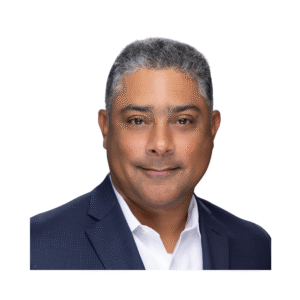
*KPMG Americas does not provide professional services to clients and does not participate in client engagements.

Responsible for managing 4 business units within Deal Advisory in South America, including Strategy, Transaction Services, Valuations and Capital Advisory.
Brian Samson (00:01.49)
Welcome everyone to another episode of the Nearshore Cafe podcast. I’m your host, Brian Samson And if you are interested in the broader &A landscape in Latin America, this is going to be a great episode for you. We’ve got some real superstars here from KPMG. I’ll introduce them in a second. First, let me thank our sponsor, Plugg Technologies, PLUGG.Tech.
a great way to connect talent from all over Latin America with growing US businesses. Let me introduce our guest here. We’ve got JP Trio, who’s the Deal Advisory Partner for KPMG and the Regional Advisory Leader for KPMG Americas. And we have Alan Riddell, Head of Deal Advisory for Brazil and South America at KPMG Brazil. Welcome, guys. Thanks so much for joining us.
JP Trouillot (00:59.32)
Thank you for having us.
Alan (01:01.421)
Thank you.
Brian Samson (01:01.592)
So I wanted to really get into the broader &A landscape, like what’s going on? I think you guys have done a lot of reporting on this subject. So maybe we can start with JP giving us the broader 30,000 foot view and also answer this question, are you more optimistic?
in January 2026 than you were in January 2025.
JP Trouillot (01:35.768)
Great question. I would say that generally speaking, the answer to that question is yes. We conducted a survey recently of 400 executives around the globe who have experience investing in Latin America. And there was a significant increase in confidence level and optimism about &A in Latin America.
JP Trouillot (02:07.608)
Part of the reason that exists, that sense of optimism is there now is because after many years of investing in the region, investors have become more sophisticated, understand the inherent risk of investing in the region and have learned from those experiences. So they have a view of a much more confidence going into the region. Latin America historically has been…
let’s call it volatile. But that experience really lends itself to having a more sophisticated global &A strategy and approach. And so we’re seeing that optimism from our research. The other thing that I think lends itself to positive feelings towards investing in the region is that there are some very attractive investment opportunities.
in the region. And I’m sure we’ll get into it as part of this discussion, but in sectors such as infrastructure, technology, energy, financial services, these are sectors that are expected to grow and where there are a number of opportunities in the region for foreign investors.
Brian Samson (03:31.308)
Yeah, and what do you think, Alan?
Alan (03:34.51)
Yeah, I mean, if we look at the, you know, to look at the trends, what we’re seeing is there’s a slight uptick of volume of deals in the region. When I was just discussing earlier today, the numbers that we compiled here for December closing the year were
the rhythm of deals. We’re on a run rate specifically for Brazil here, which is about 70 % of the total volume here of deals happening at least in the South America region. We’re running at about just over 300 deals per quarter. So that’s
you know, just over 300. So it went down actually to around, you know, to 30, to 50, you know, the lower 200s per quarter. Now it’s ticking up to the 300. It’s still well below the record levels we had in 21 and 22.
post COVID. But it is improving and I’d like to just touch on the point that JP mentioned. There’s some very interesting deals, very attractive deals that are being done and are available to be developed here.
As a result of several years of now high interest rates, if you look at Brazil specifically, 15 % is the local base rate in the market. So at the spread, interest rates are really, really high. The interest expense, the companies are having to pay really high. So that’s allowing for the larger and unlevered groups to…
Alan (05:26.283)
you know, just look at great opportunities to evaluate and acquire companies that perhaps have a little bit more leverage or don’t have access to capital, but have a good product, have a good business, and that’s an attractive valuation.
So it becomes a very interesting opportunity there. Obviously, it’s a heightened risk environment as well. So as we’re moving forward to looking at the reduction of interest rates and a little bit less risk, I think the tendency is to have an acceleration in the volume of deals.
And I just one thing, the locals have increased their share in the volume of deals, but we are seeing the foreigners get their act together, especially from the US, but also from Europe. We’ve had a lot of investments coming from Asia, and they kind of became more and more relevant to the expense of US investors and European investors. But now,
Brian Samson (06:20.333)
Yeah.
Alan (06:36.909)
We’re seeing it balanced back, perhaps. And so, yeah, I would totally agree with JP. And I think we should have a very good year coming up in 26 and 27 for M &A activity.
Brian Samson (06:51.31)
Yeah, I was gonna say, it’s been nothing but volatile from very bullish years to about as dead as it gets, you know, in 2023. I wanted to ask about maybe like the macro attractiveness of Latin America. And if you think the rest of the world is less attractive, and that’s why there’s there’s interest in Latin America or Latin America is just
so interesting right now that it would have attracted investment anyway.
JP Trouillot (07:26.892)
Yeah, I’ll share my thoughts on that. Certainly, if you look at kind of the volatility in the world since, let’s say, the last three, four years, the volatility in Latin America maybe looks a little less volatile. If you think about the economic stability of the region,
Brian Samson (07:48.718)
Hmm.
JP Trouillot (07:55.243)
It has performed fairly well. Of course, you have to look at it country by country, but you’re seeing signs of stability. The other thing that I think is driving some of this attractiveness is that governments are taking more actions to attract foreign investment. I think Argentina is a good example. The administration there has…
Brian Samson (08:15.503)
Hmm.
JP Trouillot (08:23.018)
implemented this large investments incentive regime to attract and protect foreign investors who come into the market. since that has happened, you’ve seen a considerable increase in &A activity in Argentina. And so and there are other examples like that where you see political shifts being more pro business.
Brian Samson (08:50.5)
Mm-hmm.
JP Trouillot (08:50.632)
and seeing the reaction and correlation to higher FDI into the country. certainly seeing more stable signs in Latin America. when you compare again to the turbulence that we’re seeing in other parts, whether you think about US and China relations, whether you think about the Russia-Ukraine war, Latin America looks a little bit more attractive.
Brian Samson (09:16.707)
Yeah, yeah. I also wanted to dive a little more into what you said about political stability and maybe some more pro-business as the region kind of shifts back and forth between left, right, left, right. How much does that impact the desire of especially US capital and the Latin America?
Brian Samson (09:46.969)
Maybe I’ll ask this one to Alan.
Alan (09:49.654)
Right. Yeah, okay, I’ll give it a try here, JP. I think, you know, from my point of view here, sitting in Sao Paulo in Brazil, where we have a left-wing government, but one thing that has caught my attention here is that they have learned, they have managed, they have learned that…
They need to make an attractive proposition to attract capital if they want to see infrastructure being developed, if they want to see several of the investments that they have realized they don’t have the money to do themselves. And therefore they need to attract the private sector to come in and step in and invest in roads, invest in water and sanitation, let’s say general infrastructure.
to improve the quality and the efficiency of the services and bring this benefit to the population. I think they have finally understood that this is necessary and it can work really well. It can work really well. so this is something that has changed. If you look back, you know, five, 10 years, maybe the resistance was much bigger.
But now they’ve realized this and actually they are working hand in hand very actively with the multilateral institutions such as IFC, IDB, World Bank that are working together with several governments both on the federal, state and also on municipal levels developing investment programs, developing the regulatory framework for investments, doing all the
market analysis and getting everything prepared so that the concessions and privatizations can be offered with a very high quality information and structure to increase the attractiveness to the private sector. So I think, Brian, that’s something that has caught my attention and I think has been very positive. So even though we have had a lot of, you know, increase in left-wing governments,
Alan (12:05.643)
they have actually understood the importance of working with private capital. that has been very positive perhaps for the infrastructure sectors and some specific sectors to the detriment of others like consumer products maybe are not so subject to government programs. But I think that this has been a huge improvement.
The local big players have taken advantage of that, have moved in. But it is interesting to see that several sovereign wealth funds, global infrastructure funds, global pension funds, are actually very active in the region, not only Brazil, in the Andean region. And we’re seeing now, JP mentioned Argentina.
We’re seeing a lot of big players getting ready to do very big investments in the ENR, energy and natural resource sector. So anyway, I think it’s very, and indeed, we are seeing more right-wing governments in the new elections that are being held in several of the countries. is the pendulum is tilting back to more right-wing governments, which I think will accelerate this.
I think it was interesting to see the left-wing governments coming to understand the situation, how they need to collaborate with private capital. And now we will see an acceleration as the pendulum moves to the right. again, maybe that’s another backdrop here for our optimism regarding the development of investments and M &A.
Brian Samson (13:52.708)
Yeah, and maybe to put this simply, you know, often it doesn’t matter if you’re in the US or Latin America or elsewhere, there’s this push pool between labor and business. And Latin America has often been a very pro labor part of the world. Have you seen governments shift policies from less favorable towards labor and more favorable towards business to attract more investment?
Maybe I’ll ask this to JP.
JP Trouillot (14:25.602)
think we do. I think we do see some of that from time to time. I think one of the things that came out of our survey, we were interviewing and surveying very experienced investors. So these are companies and private equity investors that have kind of seen the cycles in Latin America and have kind of built a resilient strategy towards how to protect themselves.
towards these types of shifts. know, Alan mentioned about what sectors are at greater risk than others. The other area that investors are now kind of more experienced at is how to structure the deals to minimize that risk as well. For example, having very strong local partners.
in order to kind of help minimize that risk who are well connected in the business community. So I think while we see different shifts along the government, investors are also kind of anticipating that and have that experience to deal with that.
Brian Samson (15:40.557)
Yeah, I think there is a concept shift from risk avoidance to risk architecture. Could you talk more about that too, JP?
JP Trouillot (15:51.788)
Yeah, think when I think about risk architecture and how to not only get a deal done, but how to ensure that risk is minimized after the deal closes. And creating a plan to achieve the objectives of the acquisitions and to create the value from that acquisition. so,
It’s not so much about now winning the deal. It’s really more about what is the long-term plan to create value and starting that process very early on in the due diligence process of planning that out and identifying the areas that might be a risk towards achieving those objectives.
Brian Samson (16:44.481)
Alan, is there maybe an example if we were to micro this in Brazil of the risk architecture and how that is maybe playing out in Brazil?
Alan (16:56.683)
Yeah, well, I think, I mean, it’s certainly been very interesting evolution of this, the risk identification and de-risking the deals and plugging in the value creation, right? So the due diligence process has become much more sophisticated compared to…
to, let’s say, again, five years ago, 10 years ago, it has become much more sophisticated. The teams do bring in, in addition to the finance and tax regular analysis to identify contingencies and the regular risk is.
is to understanding the strategy, right at the beginning, looking at the integration, what the integration will look like, what are the risks of integrating the company, and also bringing in all the value creation opportunities and synergy evaluations and the creation of more value once the assets are integrated and how you’re going to do all this value creation, then planning all the implementation afterwards because
That’s where the value is really going to be created, Not necessarily in the beginning of the PowerPoint planning, but the integration is really key. we’ve got really, we have developed actually, you know, the market has developed various big integration capabilities to exactly help execute and deliver both the de-risking and the value creation for the deals.
I think when we look at the bigger groups where the complexity is bigger, I can’t give you specific names, Brian. I’m not allowed to give her specific names, but we are constantly working here. There’s a very big deal that’s going on right now that has several carve-outs.
Alan (19:02.301)
I’ll put it this way, right? So, you know, big conglomerate, several different businesses. The plan is, you know, and it starts with, on the sell side, starts with reviewing the portfolio of businesses, what makes the most sense, what makes less sense. Okay, let’s look at how to carve out what we plan to sell.
and get that ready and do some kind of planning and look at all the potential this business can be generated under another strategy, another model, and get that ready for the buy side. And then the buy side will have to do some kind of similar planning and review of looking at the carve-out height was done, seeing how that fits into his model and how he’s going to scale that up.
And what are the synergies of bringing that business together? So it has become more interesting where, what JP mentioned, you know, getting the due diligence has expanded to get in much earlier, looking at the risks and opportunities and value creation, executing the deal, and then doing the integration and value creation afterwards. So that is something that makes all this business even more exciting for us practitioners that are here today.
and seeing that roll out, and especially in the cross border deals where we have the more sophisticated investors that have this view. So that has been increasing. We do expect it to increase quite a lot.
Brian Samson (20:40.269)
And Alan, if you could also just talk more specifically about deal structures in places like Brazil and other adjacent countries and maybe how complicated they get compared to the US structures with earnouts, seller financing, know, other components.
Alan (21:04.013)
Yeah. think one of the things that we have seen here in Brazil, two things have happened. And I think one big driver here that is pushing for these changes is not only the risk, but the high interest rates, for example. So we have seen, you know, it’s…
The difference in valuation has increased. The sell side wants to sell at a higher valuation. Perhaps the valuation he had before interest rates went up. The buyer is looking at, you know, there are not so many buyers. And, you know, if I’m discounted at a higher rate, the valuation is lower. How are we going to close this gap and create a deal zone? And the solution is exactly to be more creative in structuring the deal.
how the payout is going to work, not necessarily having the full payment at the beginning and structuring a payout that could even be higher, but contingent to performance. So we have seen this move as a necessity to help close the gap and have the deals closing. But that also means that the sellers also are being dragged in to
perhaps stay a little bit longer and help in the transition and the integration and the development of the asset after the deal. But I think that that’s how it has been evolving. but again, I think as we move forward, looking into the future, Brian, you know, as we have more investors coming in, which is what we’re the trend that we’re seeing.
We’re seeing the lower cost of capital, not only locally, but the lower cost of capital in US dollars. Maybe I think we do expect people to be more aggressive and perhaps with a broader portfolio of options to be working on. So it’s going to be interesting to see that play out.
Brian Samson (23:11.246)
No, no, no.
Brian Samson (23:15.203)
Yeah, that makes sense. JP, we’re in Trump term number two. And if we’ve seen anything, there’s winners and losers, you know, in all these different administrations. We’ve seen a bigger push towards Latin America, you know, as maybe China and India have have been hurt.
Can you talk about what that means for supply chain, manufacturing, are companies looking to acquire closer to home? What’s going on there?
JP Trouillot (23:51.64)
Certainly the volatility that we’ve seen in trade relations and tariff policy, think net-net have had a positive effect on Latin America for a few reasons. One is because it’s closer to the US. So it is seen as…
you know, from a fragility standpoint of a supply chain, the distance makes it a little bit more amenable and a real viable alternative to Asia supply, Asia supply, supply chains that are dependent on Asia. The other thing, as you mentioned, and I think there’s been a trend towards improving
economic relations between the US and Latin America. so kind of facilitating the ability to have operations in Latin America supporting US businesses. And if you think about, you know, the time that it takes to to set up operations Greenfield,
Companies don’t have, particularly public companies, they don’t have that kind of time before they can start to see the benefits or address some of the issues that they have in their supply chain. So acquisition is a natural option for them to accelerate addressing some of those supply chain issues.
We’re also seeing, and that’s part of the reason why I mentioned infrastructure as a sector that is seen as growing in the region. The infrastructure that is needed to support near-shoring operations is something that certainly we’ve been seeing investments in. We’ve equity funds, raised funds.
Brian Samson (25:57.584)
Thank
JP Trouillot (26:00.63)
to invest in exactly that. so those trends are certainly, I think, correlated and why I think driving some of the optimism that we’re seeing for &A in the region.
Brian Samson (26:13.465)
Yeah, I guess there’s the old adage of buy versus build, but sometimes you want to buy when the iron’s hot, right? Do you feel like there’s some sentiment there of it’s that this is the time to do it. So we got to accelerate our, our action here.
JP Trouillot (26:31.99)
We are seeing that. We are seeing companies be more aggressive. I can think of a few examples around the whole kind of this energy transition that’s happening. you think about data centers, for example, we’ve seen some very interesting investment thesis around building data centers in Latin America. So I think that’s a testament to
to some of the optimism that we’re seeing.
Brian Samson (27:03.469)
Yeah.
Alan (27:04.461)
And maybe I can just, that is probably, we hosted an event, a private equity event a couple of months ago. And I was one of the moderators in the panel and I had the opportunity to have a couple of, actually one sovereign wealth fund and a large pension, a global pension fund. And my question was, what’s the hottest,
Brian Samson (27:06.073)
Please.
Alan (27:30.701)
topic for you guys right now, looking into 26. And it’s infrastructure and specifically they mentioned the data centers for example. And the infrastructure related to data centers energy. So we have abundant energy here in Latin America and very renewable energy by the way.
Brian Samson (27:40.153)
Hmm.
Alan (27:52.174)
And the quality of labor has, this was a previous, you were asking about labor a little bit before, Brian. So labor, although we still have a lot of improvement to do in the cost of labor, but the quality of labor has improved. The level of education, the tech savviness of the population, the very tech savvy.
You know, these are good ingredients. These are all, if you put them all together, they’re all very positive ingredients to put together and, you know, move forward with these investments. In the near shore, not only, I like the name of the cafe, the Near Shore Cafe, but also, again, what JP mentioned, a more friendly shore as well, compared to further away shores. So you have the combination of these two things.
Brian Samson (28:42.393)
Yeah.
Yeah, and staying with you, Alan, the post merger complexities, especially getting the right culture, getting the right people on board, bringing multiple countries together. Can you talk more about that? And what should buyers be aware of when they’re integrating in Latin America, especially when it comes to people?
Alan (29:12.577)
Right. Brian, that’s I think that is a that is a when I look around, not only Latin America, the people and culture issues are super important, but they are pretty much, you know, it’s not a regional. doesn’t there’s not too much regional. The challenges are pretty much the same. I think perhaps, you know, the the big when we’re talking about cross border deals.
Brian Samson (29:31.832)
Hmm.
Brian Samson (29:41.678)
Mm-hmm.
Alan (29:41.686)
I think there’s a much bigger cultural challenge to overcome and get the different people to understand exactly what is the new culture in the cross border deal. It’s already difficult when it’s a local deal with two different cultures. We were involved in a big retailer, shopping centers without names here, merged. And one was a super modern
Brian Samson (29:45.133)
Yeah.
Alan (30:11.245)
uh, you know, tech savvy culture. The other one was a very classic old school, uh, team. And, know, we have to build a new culture. What is the new? It’s not even, you know, you don’t have to adapt one to the other. We create, I have to create a new culture, uh, and get everybody to buy in and adapt to the new culture. So I think, you know, that’s always a very, uh, uh, interesting, uh, challenge to be working on in the integration planning and especially in the integration.
And when it’s cross border and you go into places where English is not so well spoken, it’s definitely a bigger challenge. I think some countries, English is a second language and it’s very well spoken in other countries. really, depending on which country you go into, that can be a bigger or less challenge. But always a great.
Brian Samson (30:48.494)
Yeah.
Alan (31:08.67)
a section of the deal to look into and plan and work on.
Brian Samson (31:13.773)
Yeah, in the post merger world, do you see any blind spots in having an executive do an expat assignment versus say hire the country manager locally? Are there best practices or big mistakes that you’ve seen for both of you?
JP Trouillot (31:38.188)
Yeah, I mean, I think that usually what works best is a combination of both. At least that’s what we’ve seen is that you want an executive that has kind of the buyer companies, culture practices to make sure that that is being implemented in the local company. But at the same time, it’s very important to be
Brian Samson (31:54.393)
Mm-hmm.
JP Trouillot (32:07.778)
very cognizant of the local culture, the local business practices. And so you need that local leader as well to help bring along the local labor.
And so those are, you know, combination of both is generally what I see works best.
Brian Samson (32:30.115)
Yeah, any you can add there.
Alan (32:30.155)
Yeah, that reminds me of a deal. to jump in. was where there’s another deal here. It’s actually a greenfield. It’s not a brownfield. They’re building it. It’s a big international hotel chain. They’re building an iconic. They’ve just built an iconic new hotel in San Paulo and the general manager was brought from one of the international operations, but he’s a Brazilian.
that was working abroad. So that’s a genuine two-in-one like JP. That’s the best combination, know, have both in one. You can have the, you know, it has a broad experience of the headquarters and has the local insights of the culture and the.
JP Trouillot (33:02.849)
Yeah.
Alan (33:18.827)
regulation and the business practices and the pitfalls. So I think it’s swinging back this pendulum to incorporate more and more of the local management component that has become more more sophisticated, be it because of opportunities to be integrating to other markets globally or just the local markets have also evolved a lot and have become more complex, more capital.
Brian Samson (33:36.44)
Hmm.
Alan (33:48.674)
the capital markets in not only Brazil, but in the region as a whole. In Brazil, it has accelerated a lot in the last 10 years. So that brings a lot of knowledge and expertise to the local management here that is very valuable when we’re looking at staffing and planning in the deals.
Brian Samson (34:12.311)
Yeah, well, as we start to wrap up, I wanted to give each of you a chance to offer maybe a final takeaway. If there’s something you wanted to hammer home, we talked about earlier or a brand new idea we didn’t get to, please take this time to share your key takeaway with our audience.
JP Trouillot (34:31.33)
Yeah, I mean, I think and we’ve talked about it a lot, but I don’t think you can overstate how important it is to have boots on the ground when doing a deal. You know, one big mistake that I believe investors or multinationals make is looking at Latin America as one place, one region. Each
Brian Samson (34:55.779)
Yeah.
JP Trouillot (34:57.974)
country has its own distinct business culture, its own regulatory framework, its own tax regulations. And so having a generic approach to your investments could lead to a lot of risk and issues. So, you know, having that local, not just local knowledge, but local partnerships, know, aligning yourself with the right partners locally.
to protect the investment and to help grow that investment is key to success.
Brian Samson (35:36.161)
and Alan, your takeaway for our audience.
Alan (35:38.859)
Yeah, well, perhaps just to compliment here, JP, I think that is a really important takeaway. And I would add that, know, bring in, in addition to working, you know, with the deep local intelligence and teams, bring in the exercise, all the expertise of, you know, being, do all your homework, you know, do all the analysis, do, you know,
don’t just focus on the basic due diligence. Do the extra miles both before the deal and after the deal to make sure that you get the right planning using all this local expertise, but bringing this international mindset of de-risking and value creation. This is the formula for success, I think, in today’s opportunities, in today’s markets. But if you do that well, you’re
the chances are much higher of success and then creating value.
Brian Samson (36:42.575)
Couldn’t have said it better. Alan, JP, it’s been a real honor having you on the Nearshore Cafe podcast to talk about Latin America M &A landscape. This podcast is sponsored by Plug Technologies, PLUGG.tech. And Alan and JP, if our audience wants to get a copy of the report or reach out to you directly, is there a best way to do that?
JP Trouillot (37:11.377)
Yeah, you can find it on the KPMG website. That’s the easiest way to do it.
Brian Samson (37:17.689)
Perfect. Well, thank you guys again and to our audience. We will see you next time. Take care.
JP Trouillot (37:23.458)
Thanks, Brian.
Alan (37:23.661)
Thanks, Brian, for here. Bye.
Brian Samson
Founder at Plugg Technologies
Brian Samson is the founder of Plugg Technologies and a veteran tech entrepreneur, with 10 years building successful nearshoring companies. Brian has helped to grow Plugg into one of the leading nearshoring agencies, connecting technical talent in Latin America; including Mexico, Argentina, Brazil, Nicaragua and Colombia with top U.S. companies. Plugg consistently hires and places over 100 LATAM resources each year.
Plugg sponsors and Brian Samson hosts the leading podcast about doing business in Latin America with 70+ episodes, The Nearshore Cafe Podcast. In addition, Plugg brings insight and clarity to clients by supporting them with the details, big and small, to set their team up for success. Everything from currency, customs, hardware, and culture, Plugg provides advice and guidance based on first-hand expat experiences living and doing business across multiple Latin American countries. Plugg Technologies is a trusted partner for businesses seeking future-ready tech solutions including cloud infrastructure, cybersecurity, and digital operations positions
Brian holds an MBA from UCLA Anderson and prior, was an expat in Argentina and a VP of Talent for several San Francisco startups with multiple successful exits (IPO & acquisitions). In his free time he supports foster kids and is a dedicated family man.
Ready to Grow With a Team That’s Invested in Your Success?
At Plugg Technologies, we connect you to nearshore talent that brings real advantages: shared time zones for easier collaboration, strong English proficiency for clear communication, and significant cost savings without compromising quality.
Beyond top talent, we deliver thoughtful guidance and premium, white-glove service — all backed by deep expertise in Latin America and a genuine commitment to your success.
©2025 Plugg Technologies. All Rights Reserved