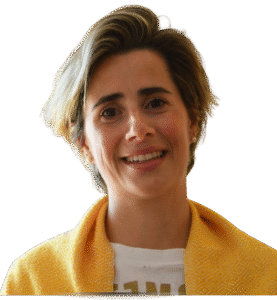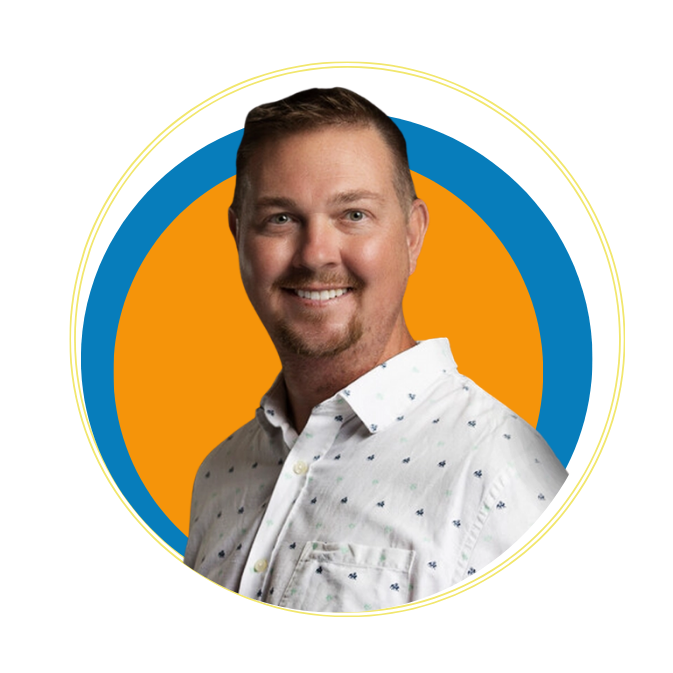

In this episode of The Nearshore Cafe Podcast, host Brian Samson, founder of Plugg Technologies, sits down with Xime Aleman, Founder & CEO of Prometeo, to unpack what it really takes to build and scale fintech infrastructure from Montevideo, Uruguay into the broader Latin American market. Xime shares how her journalism background became a competitive advantage—helping her translate complex financial systems into clarity, storytelling, and execution.
They explore Prometeo’s pivot from B2C ideas to a B2B connectivity layer, the realities of financial infrastructure across LATAM, and how trends like real-time payments and open banking are modernizing the region. Sponsored by Plugg Technologies connecting top Latin American talent with growing U.S. companies.

Fintech infrastructure is the “plumbing” behind how money moves APIs, bank connections, verification, and payment rails. In Latin America, improving this layer is critical because many systems are fragmented by country, making interoperability and digital payments harder to scale.
Early fintech focused on getting people banked with accounts and cards. Now the bigger challenge is usage moving SMBs and consumers away from cash through better rails like real-time payments and stronger banking infrastructure.
Prometeo is often compared to Plaid because it provides connectivity to financial institutions. But Xime notes LATAM requires different infrastructure and go-to-market motions, often serving large financial institutions across multiple countries.
Visit Montevideo for calm coastal walks, great meat (asado), and local food like chivito. Xime also recommends exploring vineyards near Punta del Este—especially Albariño wines—and trying pasta frola for dessert.
Brian Samson (00:01.661)
Welcome everyone to another episode of the Nearshore Cafe podcast. I’m your host, Brian Sampson. Today’s episode is sponsored by Plug Technologies, PLUGG.Tech, a great way to connect talent from all over Latin America with the U.S. companies. If you’re a founder in Latin America, this is going to be a great episode for you.
We’re gonna be talking to someone who has built a FinTech raise capital, and we’re gonna talk all about her journey and doing it from Uruguay. Please welcome Zemena Aliman, founder and CEO of Prometeo. Great to have you.
Xime Aleman (00:46.968)
Hi, Ryan. Thanks for having me. Very happy to be here.
Brian Samson (00:50.433)
Well, I shared a little bit, just a little teaser on the intro about entrepreneur doing it from Montevideo, Uruguay. A lot of great stuff we’ll talk about in the present, but I would love for our audience to get to know you. Could you take us from the start, maybe university to today? Like how did you get to where you are?
Xime Aleman (01:15.928)
Wow. So yeah, definitely. It was a long way. I major in journalism, which I always, it seems a little bit different from what I do right now, you know, being CEO of a FinTech company. And so that always seems a little bit unorthodox, you know, like a little bit different. I actually think that my background,
was a key asset for Prometeo. At Prometeo, what we build is FinTech infrastructure. We’re somehow rebuilding the foundations of the financial system. And so we are always talking about two things that usually go unnoticed. The infrastructure in the financial sector. And so we…
like as human beings, like we interact with money and so how the money moves from here to there more efficiently, more inefficiently, but we’re not usually thinking about how it went from there to there, you know? And so like the flows, how they got done, they are invisible. And then the tech that powers those flows also go unnoticed. And so being able to translate that complexity into clarity,
Brian Samson (02:25.035)
Yes.
Xime Aleman (02:42.574)
I think that that’s something that I was able to do or I have been able to do because of this background that I have, because of this, my background as a journalist, know, like being able to somehow like understand complex systems and navigate them. think that the, the, perhaps what seems like a leap for me was a step, which was, okay, like I understand how this works. You know, I’m able.
Brian Samson (02:52.418)
Xime Aleman (03:12.12)
to translate it and I’m able to talk about it, would I be able to reshape this? Is that a possibility? And I think that when that sort of clicked inside me, it was like, at least I’ll have to try. I’ll try to see if I can reshape somehow these flows, how this works. And that’s when I became an entrepreneur.
Brian Samson (03:42.347)
Yeah, that makes a lot of sense with the journalism because you’re right, don’t think about, I think a lot of companies are built by engineers with engineer backgrounds and they think like engineers, they talk like engineers, they explain things like engineers and they think everyone’s an engineer, right? So when you come from a journalism background, it’s always who, what, why, when, where, know, the mistakes, the story.
Xime Aleman (04:00.248)
Yes.
Xime Aleman (04:08.192)
Exactly. And I think that it’s not only about the pitch, know, it’s not only being able to design a good pitch deck, you know, and a compelling blurb or elevator pitch, but it’s actually like, somehow I think that it goes unnoticed that we interact with reality.
because of language, you know? so language is the interface in which we interact with everything, even ourselves, you know? And so being able to understand that, I think is capital, you know? And I think that that’s the asset because basically, if you’re pitching a problem that hasn’t been addressed or that somehow is new, you are creating that problem for someone else, you know? Like someone else will notice that problem because you have addressed it through language.
And so I think that having that expertise, it’s really important, you know, because it helps you to, to, yeah, to make it more clear, to make it more compelling, you know, and especially when you are building something from scratch and especially early on in the, in the startup, being able to attract people, you know, like make them gravitate towards your idea. That’s very, very important and it’s very powerful.
And you only get to do that through language, you know, and with investors, with talent, with everyone, that’s the interface. And so, yeah, I think that’s, that’s something that for me was very important from, from my background.
Brian Samson (05:37.207)
Yeah.
Brian Samson (05:48.737)
Yeah, I think that’s great. Well, tell us more just about your journey. How did you get to where you are today?
Xime Aleman (05:56.818)
okay. So, basically I, as I mentioned, studied journalism. went, I worked for a couple of years in media outlets in, in Uruguay. And, I got hired by this company, like this entrepreneur that wanted to build a digital spin-off. Like he, he owned a publishing house and he wanted to build like a spin-off that involved
digital content, you know, and that was it, you know, like he knew that something will happen. I happened with digital content and that, that his company will have to shift towards that. And I was in charge of leading that endeavor and I became like an entrepreneur, an intrapreneur and I loved it. You know, like this thing, this very adrenaline process of building something from scratch.
And for me, it was sort of obvious that I wanted to do that. And so after a couple of years, the business was stable, revenue, like customers revenue, everything. so I decided, okay, I’ll go for an MBA with focus in tech businesses because this is what I love.
I’m in love with technology and I think that this new world is happening and I want to build something related to this new world. And I met my co-founders, Rodrigo, during the MBA, I met Rodrigo and Eduardo who are my co-founders. And we were talking about digital content, micro payments for digital content. And Rodrigo’s expertise was cybersecurity within the financial sector.
He used to, his background was PCI DSS for financial institutions. so immediately it was like, okay, payments and FinTech wasn’t even a word in Uruguay back then. I’m talking about 2014, 2015. And so, okay, this is like, it seems like a very interesting idea. We should explore it. And we started working on that, know, like initially last,
Brian Samson (07:55.275)
Yeah.
Xime Aleman (08:12.376)
an idea, brainstorming process, it became a digital wallet. We pivoted and then we created a PFM, know, a personal finance manager, very similar to Mint in the US to another equivalent in Brazil, which is called the Gia Bolso. And we loved it, you know, like this powerful idea about providing financial education for micro entrepreneurs in Latin America. And while doing this,
we understood that there was an infrastructure problem actually that was impeding us to build what we wanted to build. But at the same time, it was a transversal to other fintech verticals. We all had the same problem trying to interoperate with financial institutions because Eduardo’s skill set was very specific in the tech world.
Brian Samson (08:47.088)
Yeah.
Brian Samson (08:51.885)
interesting.
Xime Aleman (09:10.03)
He was able to create APIs. so we had the skills to solve that issue for our startup. But it became obvious that there was demand for that. And even from financial institutions, other large banks would ask us, OK, and how is that you are connecting? And how is that you are accessing this information? And can you use this information for this, for that? And suddenly, we were talking about
interoperability. was not about financial education, user experience, micro entrepreneurs. It was about pure tech, like the plums. And so we said, okay, this is very interesting. We can somehow, different from what we thought initially, we can still fix this system with a new infrastructure. And for us, fixing…
This system with a new infrastructure was like the kickoff of Prometeo. That was the insight that drove us to build this API that aggregates, well, right now, more than 1,500 APIs from more than 1,000 financial institutions in 11 countries.
Brian Samson (10:28.683)
Yeah, I want to talk about building from Uruguay in FinTech, which I have a few maybe assumptions or thoughts about Uruguay. And you could tell me if I’m right or wrong and like how this might have helped. So Uruguay is a small, safe, stable country surrounded by big, loud, chaotic countries. So
Xime Aleman (10:41.582)
Thank
Brian Samson (10:57.421)
people look to Uruguay sometimes as the Switzerland of Latin America. So the banks are just kind of different there. so tell us maybe about how you thought about your thesis and building for Uruguay and FinTech, and then the rest of Latin America is just different, bigger, and maybe they have different financial issues or problems.
Xime Aleman (11:22.254)
No.
Xime Aleman (11:25.814)
Well, I think that for financial infrastructure applies the same that can apply for language. We are used to think about, Latin America, leaving Brazil aside, the rest of the region talks Spanish. And if you go to Buenos Aires, you will see that Spanish is very different from the Chilean one. You have the Iapo and in Argentina is Bota.
Brian Samson (11:33.965)
Mm.
Xime Aleman (11:55.406)
No, it’s very different than Mexico, or in each Spanish has its own flavor, you know, and for financial infrastructure, it’s the same, you know, so each country has its own financial infrastructure. And so we are somehow like the last financial mile addressing the issues of that infrastructure, but then on top of it creating as nice.
Brian Samson (12:05.985)
Mm-hmm.
Xime Aleman (12:24.97)
standardization layer. Initially, our thesis was pan-regional. During the first two startups, we were very focused in the Uruguayan market because they were B2C companies, both of them. But when it came to building Prometeo, it was
It was obvious that it was B2B and of course, like Uruguay is very small and the financial market is very concentrated with very few players. But because Uruguay is also so small, those players, don’t have budget for tech deployments. They don’t take even the decisions at the local level. Most of the decisions are taken by the headquarters, being that in Spain or in Brazil.
or in the U S you know, whatever. And so like at the local level, you have very like little flexibility, you know? And so the revenue opportunity becomes very, very small. and so for us, it became like really obvious that if we wanted to build a huge company, we had to go beyond Uruguay. And so
Brian Samson (13:34.509)
Mmm.
Xime Aleman (13:47.79)
From the beginning of Prometeo, the idea was creating this huge layer of financial information, this highway of financial information and transactions. Our first customers were from Colombia. We moved right away to Mexico. I was living there for more than, I think, nine months, trying to understand how the financial infrastructure work in Mexico, how they would address open banking.
They would win the revenue opportunity in that market. And then it was like, okay, where else can we find customers for this? And we started integrating new countries, Panama, Peru. And so from the beginning for us, it was all about building connectivity across the region. Because at Rometeo, we do not define ourselves as a payment company or a data company.
or a payment player, a data player, you know, we are a connectivity layer, you know, and so what we do is connectivity. We help companies to interoperate with the financial sector. Yeah.
Brian Samson (14:50.636)
No.
Brian Samson (14:57.205)
Yeah. Could you talk about just the general Latin America, maybe banking ecosystem and, know, maybe like my, my assumption is some countries and banks are much more closed off than others and how you might navigate that.
Xime Aleman (15:01.742)
Roll it.
Xime Aleman (15:18.414)
I think that there are a couple of things that are very interesting about the current, like the state of the art in Latin America in terms of financial technology. The first thing I think is usually like,
the first years of this fintech revolution in Latin America were very focused into building financial inclusion. The problem in Latin America was that people used cash and they were excluded from the financial sector, both credit cards and banks. And so I would say that since 20…
in 11, 2012 to 2020, there was a lot that happened that involved building inclusion. So making for people easy to access a credit card or a debit card, power them with a wallet or a bank account. And I would say that Latin America did a great job.
in that direction, because like on average, we can talk about like, we almost doubled the, the, the inclusion in the content. Okay. And so that was a huge effort. I think that right now, and like the last couple of years have been about understanding, okay, powering them with a credit card and a bank account is that financial inclusion? Is that it? You know?
What else? know, it’s like, because in many cases they have that bank account, they don’t use it. You know, they have that credit card because they are, but they are not using small and medium businesses. keep using cash, know, 80 % of the transactionality goes over cash. You know, that’s not an infrastructure, you know, how can we create a better penetration of digital payments? And I think that a lot has been happening around that, you know.
Xime Aleman (17:35.734)
And so right now you have real time payment systems in of course Brazil, which is PIX a huge success, a huge success. The penetration was well, hyper growth. Like I would say that any startup will dream with the metrics of success that PIX has had, an amazing accomplishment from the central bank in Brazil. You have Spay in Mexico, you have Breve, it’s a
picks like system that’s been deployed in Colombia. Peru, for instance, is doing something a little bit different, but equivalent, which is implementing UPI, which is the Indian real-time payment system, the one from India. So they are taking it to Peru and implementing that, which is amazing. It’s like that will be something very different to what the rest of the region has done. You have open banking in Brazil.
Brian Samson (18:20.459)
Yeah.
Xime Aleman (18:35.426)
But then you have real-time payments also in Argentina. You have open banking in Brazil, a huge success as well. The penetration of open banking in Brazil is better than the one in India or the one of UK. So great infrastructure, fintech infrastructure in Brazil. And also, there’s an open banking regulation in Chile, which is being implemented as we speak. And Colombia has a draft.
that will get to a regulation hopefully soon. But I think that it’s expected that towards next year we’ll have like an in place a proper regulation of open banking in Colombia. And so I think that overall the region has done a huge effort in order to mutate this infrastructure and taking it to the next level.
understanding the complexities of the region, know, and something that for me is especially using talking with US based people in Latin America, credit cards do not have the penetration that they have in the US. So it’s not the same. That’s why alternative payment methods are so important in Latin America. And that’s why the banking rails are so important in Latin America and have grown.
Brian Samson (19:48.01)
Yeah.
Xime Aleman (20:01.11)
at the speed that they’ve had. And so I think that we need to somehow revamp this old legacy infrastructure from the banks to create this new layer of digital payments that complements the infrastructure from the credit cards.
Brian Samson (20:21.023)
Yeah. You know, two questions and they’re a little bit different. The first is, as you brought up the US and there’s a lot of US listeners on this podcast, is there maybe a company that
It has a lot of similarities to what you’re doing, it may be plaid or stripe or chime. Could you maybe talk about a US player that might be common to what you’re solving?
Xime Aleman (20:51.264)
Yes, so I would say that in terms of the infrastructure that we have built and the connectivity that we offer, Plaid definitely is the benchmark. It’s like, And actually we used to say like we are Plaid for Latam, you know. But because Latam works differently towards the US,
Brian Samson (21:08.727)
We’ll right back.
Xime Aleman (21:16.462)
It didn’t make sense to keep saying that, you know, because at the same time we are similar, but we are not that we are another thing, you know, like something that has been done thinking out the needs of this region. And so that’s why I like platform at time doesn’t apply, you know, it’s a different thing. It’s like another Frankenstein, you know? And so, but I would say that the comparison applies.
Brian Samson (21:32.439)
Mm-hmm.
Brian Samson (21:36.641)
I’m
Xime Aleman (21:42.57)
Then I think that in terms of perhaps like the go-to-market is more of a more treasury, you know, because different to Plaid, which has always been more consumer facing or more inclined towards small and medium businesses, our sales motion is financial. Okay. And so our customers are large financial institutions operating in multiple countries at the same time.
Brian Samson (22:04.95)
Yeah.
Xime Aleman (22:10.914)
And so we enable them with better infrastructure so they can reach with better products, their customer base. Okay. But that’s also different from what Plaid does. And so I would say that we are in there in an in-between our, like the most popular use cases for Prometheus, our account verification. So we are top of mind player in verification of PE.
Brian Samson (22:23.724)
Yeah.
Xime Aleman (22:40.202)
in the region, are providing verification of PE in Latam and the US. We launched our verification of PE products in the US earlier this year with name matching capabilities. so being able to offer that in the US, know, that like standardizing this verification connectivity across not only Latam, but also the US, that for us is a huge milestone, you know.
Brian Samson (23:06.487)
Hmm.
Yeah, yeah.
Xime Aleman (23:10.062)
And then we also provide an API to automate pay ins and pay outs in all of the countries that I just mentioned. Okay. And so I think that’s something else different to what Platt does or what Montregerie does is that of course we have a cross border angle to our payment solution. Okay. Which is basically being able to offer connectivity to our customers in the countries where they do not operate.
Brian Samson (23:30.541)
Yeah.
Xime Aleman (23:39.904)
and help them to operate there.
Brian Samson (23:42.731)
Yeah, yeah, that makes sense. That makes sense. And then my other question is maybe just more of a comment on the state of inflation in Latin America. And by the way, like the US has its own problems. You know, yeah, yeah, the US certainly has its own problems. there’s, you I mean, you know, as I lived in Argentina, a long time ago, you know, there’s what the state says it is, and there’s what it really is.
Xime Aleman (24:12.238)
Yeah.
Brian Samson (24:12.533)
the alternative realities. it got me thinking about banking penetration and people wanting to trust banks and use banks. You don’t have a lot of control over that and inflation. But maybe just if you had a comment around
banking penetration versus countries with high inflation, low inflation and how that maybe impacts your company.
Xime Aleman (24:44.558)
think that…
It doesn’t impact our company as it is, but I think that definitely it was a driver for us, a driver to build what we build. And this is something that I, it’s very dear to me, it’s something very important, which is core to my beliefs as an entrepreneur, which is like in latam, like,
Brian Samson (24:55.437)
Mm.
Xime Aleman (25:16.086)
we have like these issues, know, inflation, devaluation, poverty. on top of that, you have like, of course, money is scarce, you know, like it’s difficult to earn money. It’s difficult to keep the money, you know, because you all the time are spending on things, you know, trying to cope with your budget, you know, somehow make miracles turn
Brian Samson (25:42.208)
I’m
Xime Aleman (25:44.886)
of events and being able to pay everything that you have to pay. And that’s like daily life for an average person in Latin America. But on top of all of those things, you have this thing about the experience of money. It’s very hard to open a savings account. And so when you have savings, it’s a nightmare navigating the bank branch in order to open the bank account.
Brian Samson (26:00.492)
Mm.
Xime Aleman (26:14.592)
And so if you want to save them, you don’t want like the bank won’t pay you a rate on the money that you’ve put there, you know? And so like, it’s not just like earning money, but also saving money is very hard. Investing is very hard, you know? And so it’s not just like that overall money is scarce, but also that the experience with money is very hard, you know? And because…
Brian Samson (26:40.107)
Yeah.
Xime Aleman (26:42.026)
everything that you will do related to money, it will be awful, painful. It will become a struggle for you. And so I think that’s something, and this is something that I always tell the team, as entrepreneurs, we won’t have a say in on inflation, devaluation, poverty. That’s not on us. That’s another set of people that they have to like…
Brian Samson (26:47.543)
Hmm.
Xime Aleman (27:11.98)
get that better. as a fintech entrepreneurs, we do have a saying on reshaping this experience with Making for people easier to have all these experiences towards money and fill all money in a different way that they do right now. And I think that those macros somehow create this context in which at least being able to solve that friction for people.
Brian Samson (27:19.177)
Mmm, yeah.
Xime Aleman (27:41.878)
I think that that’s very, it’s challenging, but at the same time, it’s very comforting.
Brian Samson (27:48.171)
Yeah, yeah, I like that. On our podcast, we’ve had several VCs that have invested in Latin America. are based in Latin America, some are in the States. And for me, it’s very exciting because I think 10 years ago, there wasn’t a lot of attention and new capital flowing in for entrepreneurs. think it’s wildly different today. There’s a lot more attention.
but I’d like to just focus on your specific scenario of at what point did you decide you needed to raise capital? You wanted to raise capital and how did you think about that? And obviously you were successful. So if you have any advice for those listening on your own, experience.
Xime Aleman (28:38.284)
Yeah. when we started, as, an entrepreneur team, entrepreneurial team, with my co-founders, whether they want to, and Eduardo, like fundraising wasn’t even a thing in Uruguay, you know, very small market. there was like, there wasn’t a busy ecosystem, you know, like, no one, like no one knew like.
Where are the investors? know, like, how can I reach an investor? Where are they? Where do they live? You know, it was like, I don’t know, you know, it wasn’t a thing. It wasn’t possible for us. Yeah, of course we were strapped, you know, and for us, it was all about getting customers. Like how can we get customers? and the, like the, the first two startups, like that was our, our mindset.
Brian Samson (29:09.536)
No.
Brian Samson (29:15.885)
See ya.
Xime Aleman (29:34.666)
But then when we started building Prometeo, Mexico launched this framework, which was the FinTech law addressing open banking. so we thought, okay, we should go definitely to Mexico because we think that time to market there is more near than anywhere else in Latin America. And so we went to Mexico and in Mexico, the BC
Brian Samson (29:57.645)
Mm.
Xime Aleman (30:04.494)
ecosystem was much more developed. There was another maturity in the startup ecosystem. And we started talking with other entrepreneurs and then it became somehow like obvious that if we wanted to build something in the scale of what we wanted to build, something that would operate in 11 countries, know, like revamping the financial infrastructure.
If that was the scale of the vision, that vision needed to be powered with another scale of funding, especially given time to market, given that the opportunity was now, not in 15 years. And so we started fundraising. And something that I’m always very honest about is that
Brian Samson (30:38.358)
Mmm.
Xime Aleman (31:00.438)
The fundraising experience is very contextual. It’s not the same for any entrepreneur. And so my advice, I don’t know, doesn’t apply to all realities. It applies to mine and to others that might find themselves in a similar place of the one that I was. And so, yeah, I think that…
Brian Samson (31:05.709)
Mm.
Brian Samson (31:11.629)
Thank
Xime Aleman (31:24.366)
I’ve learned a couple of things along the way. I think that it’s very important when fundraising to understand clearly the audience, you know, what’s the investor mindset, you know, and I think that that’s very important because you can understand how is it that they are like, like the boundaries, you know, like what is that they are thinking, you know.
Brian Samson (31:37.537)
No.
Xime Aleman (31:54.27)
And I think that that’s very important. And I think that there’s something that I’ve always done that has played in my favor, which is like basically never gave up on an investor that said no. Like, I don’t know, the investor that led our pre-seed, I talked with him for over a year. The investor that led our…
Brian Samson (32:09.645)
Yeah, yeah, yeah.
Xime Aleman (32:23.982)
I talked with him for, I don’t know, like more than two years, you know, always coming back, always showing results, always showing like the level of execution that we could have accomplished, you know. And ultimately, I think that that speaks for itself, you know, when you reach a certain amount of credibility.
Brian Samson (32:31.627)
Yeah.
Brian Samson (32:41.911)
me again.
Xime Aleman (32:52.468)
you become unavoidable. It’s like, okay, there’s definitely something here. And I think that that opens doors. It doesn’t open all the doors, but I think that it opens enough doors.
Brian Samson (33:10.656)
Yeah, no, I think that’s wonderful. Zimenez, as start to wind the show down, I always want to give our guests a chance to talk about their home countries, home cities for the sake of tourism. So tell us more about Montevideo for those who’ve never visited. What do they have to do? When should they visit? What time of year? What should they eat? Tell us about that.
Xime Aleman (33:25.516)
Okay.
Xime Aleman (33:38.309)
Okay, amazing. Yeah, definitely. I live in Montevideo. I love Montevideo. It’s a very small city. Very safe, very quiet, know. 1.5 million people. I think that number can create like, it portrays what you can expect here. Not a crazy nightlife, Not a…
a lot of people is not very cosmopolitan, you know, it’s like, but it’s very calm. It’s a city that you can come in order to relax, enjoy the seaside, a very beautiful seaside, enjoy the sky, know, enjoy like walking peacefully in the city. And I think that after 30s,
you reach an age in which you value all of those things, you know. So I would say that it’s plus, this is a plus 30 advice. And then I would say that in terms of food, great, great meat, great meat, great meat. Ask for asado. We have a local sandwich that is called chivito. Ask for chivito. And then…
in the last couple of years, great wines. Not only the Nat, which is like the wine that is more popular in like from Uruguay, you know, like the one that usually characterizes us, but great white wines, albarinos, very nice albarinos that are being planted.
Brian Samson (35:05.27)
you
Brian Samson (35:18.924)
and
Xime Aleman (35:23.95)
in front of the sea, know, like near Punta del Este, vineyards. If you like vineyards, you should go definitely to Punta del Este and visit local vineyards nearby. There are a couple of them, Viña Eden, Garzón, of course, Altos de la Ballena, which is my favorite one. It’s more an underground one, but I would definitely go there, Cerro del Toro. And I like wine, by the way.
it wasn’t obvious by now. what else? When it comes to sweet things, there’s a local cake made with Queen’s jam that it’s called Pasta Frola. You should definitely visit a good bakery and ask for one.
Brian Samson (36:09.313)
Mm-hmm. Okay.
Brian Samson (36:15.903)
Amazing. I love this advice. I can’t wait to go back and try some of these things. Especially the white wine. I didn’t know that was a special thing in Uruguay. I did not know that.
Xime Aleman (36:27.372)
Yeah, a lot of Albarino recently. Good Chardonnays, but especially Albarino is something that you can find like a very good quality wine. Yeah.
Brian Samson (36:35.785)
Amazing. Well, Zameda, it was my pleasure to have you on our show today. Thank you so much for being a guest.
Xime Aleman (36:44.142)
Thank you, Brian. was a very fun conversation. I really enjoyed it.
Brian Samson (36:47.923)
Good. Well, you’re listening to the Nearshore Cafe podcast sponsored by Plug Technologies, PLUGG.Tech. Great way to connect your team with all the amazing talent in Latin America. Thanks again for listening. We’ll see you next time.
Brian Samson
Founder at Plugg Technologies
Brian Samson is the founder of Plugg Technologies and a veteran tech entrepreneur, with 10 years building successful nearshoring companies. Brian has helped to grow Plugg into one of the leading nearshoring agencies, connecting technical talent in Latin America; including Mexico, Argentina, Brazil, Nicaragua and Colombia with top U.S. companies. Plugg consistently hires and places over 100 LATAM resources each year.
Plugg sponsors and Brian Samson hosts the leading podcast about doing business in Latin America with 70+ episodes, The Nearshore Cafe Podcast. In addition, Plugg brings insight and clarity to clients by supporting them with the details, big and small, to set their team up for success. Everything from currency, customs, hardware, and culture, Plugg provides advice and guidance based on first-hand expat experiences living and doing business across multiple Latin American countries. Plugg Technologies is a trusted partner for businesses seeking future-ready tech solutions including cloud infrastructure, cybersecurity, and digital operations positions
Brian holds an MBA from UCLA Anderson and prior, was an expat in Argentina and a VP of Talent for several San Francisco startups with multiple successful exits (IPO & acquisitions). In his free time he supports foster kids and is a dedicated family man.
Ready to Grow With a Team That’s Invested in Your Success?
At Plugg Technologies, we connect you to nearshore talent that brings real advantages: shared time zones for easier collaboration, strong English proficiency for clear communication, and significant cost savings without compromising quality.
Beyond top talent, we deliver thoughtful guidance and premium, white-glove service — all backed by deep expertise in Latin America and a genuine commitment to your success.
©2025 Plugg Technologies. All Rights Reserved