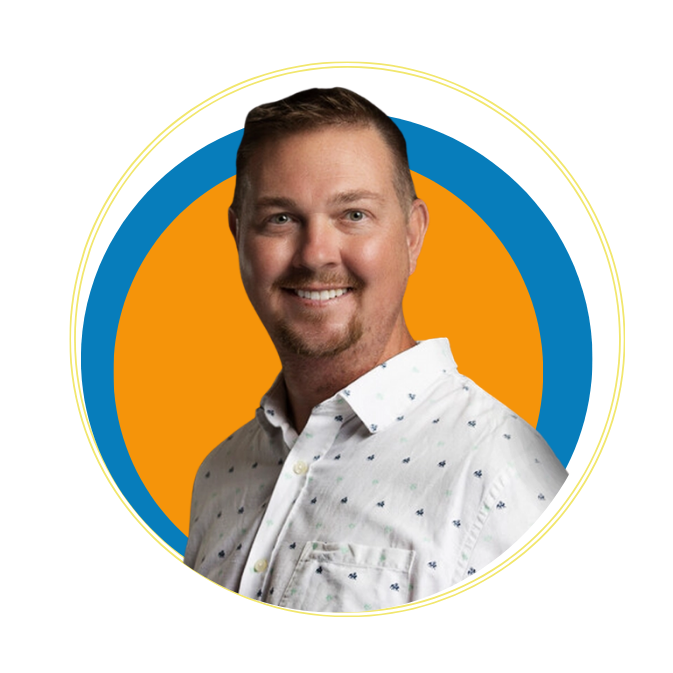

In this episode of The Nearshore Cafe Podcast, host Brian Samson, founder of Plugg Technologies, sits down with Jen from Expatsi joins Brian Samson to share what it really takes to leave the U.S. and build a life in Latin America. From relocating to Mérida, Mexico to building a platform that helps others do the same, Jen covers expat visas, residency pathways, healthcare quality, cost of living comparisons, and why more Americans are exploring international living.
This episode is ideal for remote workers, digital nomads, and founders who are curious about living and working from Latin America.
Key topics: moving to Mexico expat, expat life Latin America, residency visa Mexico, Ecuador for Americans, Belize expat living, digital nomad LATAM, cost of living Mexico.
Living well in Mérida, Mexico is more affordable than most Americans expect. Jen from Expatsi, co-founder of the expat relocation platform Expatsi and a full-time resident of Mérida, Yucatán, shares on The Nearshore Cafe Podcast that she and her husband live comfortably on $3,000 a month — an amount that covers a home with a pool, quality healthcare, date nights, and all daily expenses. Jen is quick to note that Mérida is not a budget destination by Mexican standards; it is considered a safe, high-end city with strong infrastructure, reliable internet, and a growing international community. For Americans considering moving abroad to Mexico, Mérida consistently ranks as one of the most accessible and livable entry points.
Belize is one of the most overlooked nearshore opportunities in the Western Hemisphere, according to Jen from Expatsi, who has visited the country multiple times and covers it as part of Expatsi’s relocation guidance. On The Nearshore Cafe Podcast, Jen highlights that Belize is English-speaking, operates on the U.S. dollar, sits in an overlapping time zone, and has multiple residency paths including investment-based options. For U.S. companies seeking English-fluent nearshore talent for customer service, call center operations, or sustainable technology initiatives, Jen argues it would be “foolish not to consider” Belize. She acknowledges that physical infrastructure is still developing, but sees significant opportunity for companies willing to invest early in the market.

We’ve helped thousands of Americans move abroad. Why not you? Start at expatsi.com.
Brian Samson (00:01.814)
Welcome to another episode of the Nearshore Cafe podcast. I’m Brian Samson your host. And if you have ever wondered what it’s like to be a legitimate expat and go from Alabama to living in Mexico, this is going to be a great podcast for you. And bonus, we’re going to get into what it’s like to see some countries we have not yet talked about on the podcast.
We’ll talk about Ecuador and Belize among a lot of other stuff. Before I introduce our guests, I want to thank our sponsor, Plugg Technologies, PLUGG.Tech. Great way to connect talent from all over Latin America with the US companies. Welcome to the podcast. Jen from xpatsy, I am so happy to have you here.
Jen From Expatsi (00:56.824)
Thank you so much for having me.
Brian Samson (01:00.216)
Let’s get into it. What a cool journey. I love talking to people that are well-traveled. You’re one of the more well-traveled people I’ve met. I’m glad that we had a chance to connect. And I think our audience would just love to hear the journey. Life in Alabama, what were you doing? How did this whole life unfold for you?
Jen From Expatsi (01:26.754)
Yeah, I don’t know how many Alabamians make it out of the country. I feel like it’s pretty sticky place. But I think I always knew there was something more that I wanted to see. You know, I went to a teensy-weensy little church school in first grade, and we did Paris week. I don’t, who thought of this? I have no idea. It probably does not happen now.
but this was the 70s and so we learned some French words and we ate croissant and we set up little fake cafes in the hall and I was hooked. I was like, you’re telling me there is something more than Huffman, Alabama in this world and in this place you sit outside and you drink hot chocolate and eat treats? You’ve got to be kidding me. And so I think I always thought that there would be something more.
Brian Samson (02:19.514)
Mm-hmm.
Jen From Expatsi (02:24.334)
but I wasn’t really sure how to get there, you know? That’s the thing. I had all of the want, but none of the knowledge. know, no one in my family had even been to college, much less traveled outside the country or anything like that. So it was always in the back of my mind. And in 2016, I had met my partner, my current husband. My husband is currently my husband.
Sorry, Brit. And he was up for whatever. That is the best thing. By the way, if you don’t have a partner who gets it, that is the best thing you can find. And he was like, you know what, whatever you say, I’m up for trying it. And so we started talking about moving abroad and we had no idea how to do it. We went and visited Canada. guess everybody says, I don’t like it here, I’ll go to Canada.
And the truth is, it’s hard to move to Canada. It is not easy. And it is insanely expensive, especially if you’re somebody from Alabama. I saw somebody renting out like their closet in Vancouver for a thousand bucks a month. Yeah, yeah. And so I was like, okay, this is not the plan, but we weren’t sure what to do. So it took us about eight years, but eventually we started to…
Brian Samson (03:32.912)
Hmm.
Brian Samson (03:38.768)
Yeah.
Jen From Expatsi (03:49.09)
learned different visa paths and we realized that maybe we could save up and maybe I’d retire early or Brett would work remote and that there were different countries you could move to under those criteria. Each country was different and so on. And eventually we had compiled so much info that we said, my gosh, we can’t be the only ones going through this. What if our business became helping other people do what we’re doing too?
Brian Samson (04:15.824)
Can you give a sense for what you and your husband were doing for careers around the time you had these big ideas?
Jen From Expatsi (04:25.294)
Sure. So I was head of marketing at a SaaS firm. And I had been in marketing for decades, marketing, digital marketing, new product development. I have an MBA from Emory in Atlanta. And my husband had been in more hands-on roles. He had been an adjunct professor, and he was a catering operations director. But during the pandemic, you know,
it was not a good time to be in catering. And so he decided to re-skill. So he went to a coding bootcamp and learned how to program software. But, you he was just getting started. You you start at the very, at ground level. And so he had re-skilled during the pandemic. was a great, great thing that he did. And it’s part of what allowed us to be able to go on and build this.
Brian Samson (04:56.207)
Yeah.
Brian Samson (05:11.152)
Yeah.
Brian Samson (05:21.306)
Yeah, and were you both working, I mean, just about everybody was working remotely during the pandemic. Were both of you doing that as well or he was doing school online?
Jen From Expatsi (05:25.74)
Yeah.
Jen From Expatsi (05:29.216)
Yes, he did school first and then he got jobs and we both were fully remote. My job kind of played like they would let me move abroad and then change their mind. But Brett’s job fully said that he could work from anywhere and he had several colleagues who were doing it and they had a management change and the new manager said, you can only move abroad if you move to India.
Brian Samson (05:50.426)
Yeah.
Brian Samson (05:58.903)
yeah.
Jen From Expatsi (05:59.022)
because yeah, they had some, you know, a call center or something. And I was, you know, we weren’t prepared to move someplace so far away and we had already gotten our residency from Mexico. So I said, um, come work with me and let’s just make it happen. We weren’t, we weren’t profitable yet. So we just poured it on so that we could, it could support us both. But the thing that people don’t realize is you don’t have to replace
Brian Samson (06:10.8)
Yeah.
Jen From Expatsi (06:28.352)
your 30 year marketing salary and your software developer salaries and benefits to move abroad. The reason why you can near shore employees and pay them less is because the cost of living is so much less. So essentially we near short ourselves.
Brian Samson (06:47.14)
That’s amazing. I think you’re the first where this is a near shore cafe. And I think you’re the first person who’s said it in those exact words, nearshore and yourselves. I like, I like how you put that before we make the, the, the literal jump to Mexico. so you, brought up Canada first and I just maybe want to compare and contrast like the process of exploring,
visas moving Canada versus Mexico. And did you look at other countries too? Were you thinking Europe because of your school Parisian experience or anywhere else and maybe how you found the guidelines? And this is probably before the CHTBT world and know, some of the research and all that stuff.
Jen From Expatsi (07:35.57)
way before,
Jen From Expatsi (07:39.786)
It was really hard to find stuff, which is why we launched xpatsy. So we started with Canada just kind of by default. And then we…
Brian Samson (07:43.279)
Yeah.
Jen From Expatsi (07:50.946)
rented a cabin, there is probably listeners have heard of Talladega, Alabama because of the NASCAR. But outside Talladega, this is how small it is, there’s a little cabin in a town called Waldo and we rented it, no internet, no cell service, no landline. We just locked ourselves down and we started listing everything that we wanted in our lives. What did we want the weather to be like, the cost of living? What did we want to be legal or illegal?
and we made a list of all those. And then, and we looked at a couple of books, but the books weren’t, you most of the books are related to people just trying to save on their taxes or whatever else. And that wasn’t our goal. So.
Brian Samson (08:35.407)
Yeah.
Jen From Expatsi (08:36.684)
We wanted a certain quality of life. So we came back and we just started researching country after country. And so we’d say, okay, what is the weather? And it would get a point, you know, if it met our needs and it wouldn’t get a point if it didn’t. And then we came up with a top 10 list of countries.
Brian Samson (08:48.324)
Yeah, okay.
Jen From Expatsi (08:55.53)
We have a quiz on our site now. This is actually how we got started called the expatsy test. And it’s essentially where other people can go through that same process. And then it will generate a top 10 list of countries for you as well. But so our top 10 countries, were, there were some in Latin America, some in Europe, some in Asia.
Brian Samson (09:08.271)
Yeah.
Jen From Expatsi (09:14.718)
and we were going to visit them over 10 years and then choose our favorite and then at that point I’d retire a little early, Brett would be working remote. But what happened was we came to Mexico next, we live in Merida, Yucatan, and we came there the next year, you know, it was going to be our first country of the 10 to visit and I said
I can’t wait. I can’t go nine more years. Like let’s move now. And that’s what spurred us to turn all of that info into expatsy.
Brian Samson (09:41.41)
Wow.
Brian Samson (09:46.734)
And both of you were, because you had already launched the business. Like you, you left your job, launched the business while you were moving, like in the process of moving to Mexico. Did I have that timeline right? Okay. Okay.
Jen From Expatsi (09:58.414)
Yes, yes. So essentially, we started in 2016. The retreat in the cabin was New Year’s Eve 2020 into New Year’s Day 2021. Our first scouting trip, not counting Canada, but our first in this vein was to head to Mexico. That was one year later. And then on the plane on the way back, I said, I wrote out the word expatcy.
Brian Samson (10:24.976)
Love it. I mean, this is part of COVID. So were there any complications with like moving abroad to Mexico and did they have different requirements or, you know, what did that look like for you?
Jen From Expatsi (10:41.294)
That’s an interesting question. A lot of people did move to Mexico during the pandemic because they were in places that were super locked down, like Canada or Europe. Two of our guides here, one is from Toronto and one is from Hungary. And they came to Mexico for the freedom because they felt so constrained. For us, on the other hand, like I said, we came here for the first time in the beginning of 2022. We were enamored by how
Brian Samson (10:51.877)
Yes.
Jen From Expatsi (11:10.964)
strict the requirements were. We had been in Alabama where it was, I mean, the wild west. we, you know, in all frankness, my father died. And it was really very, very common. And so to come here and it wasn’t just the rules, the rules wasn’t part of it. It was the tone. They had signage up that said, I’ll take care of you, you take care of me, and we’ll take care of each other.
Brian Samson (11:18.704)
Yeah, yeah
Jen From Expatsi (11:40.266)
And then when you got out into the little villages, they had the same signs, but they were hand painted. And so you saw that it was this huge community effort to say, we’re all doing this together. Now I know it’s controversial. I know people have different opinions. I’m not trying to get into all that, but for us, you know, we just wanted everybody to agree and be doing the same thing. And the craziest we were in, we were in a,
Brian Samson (12:01.444)
Yeah.
Jen From Expatsi (12:09.653)
Flamingo Preserve, I mean, it could not be more remote. On a boat, in the middle of nowhere, in the middle of this lagoon, and there was a fisherman out there on his boat, all by himself, and he had his mask on. Like, in the middle of Lake, and that’s how it was here. People on motorcycles had their masks on, everybody did. And this is 2022, keep in mind, this is not 2020. And then they had, and…
The deaths here were very, very, very low. And so for us, what was getting to us was the divisiveness in the US and the tension that everybody had with each other. And that didn’t exist here. And that appealed to us. That said, I can understand why people from Canada and Europe were very happy to not be trapped in their houses as well.
Brian Samson (12:39.855)
Yeah, yeah.
Brian Samson (13:01.614)
Yeah, yeah. And if we could just step back a second with how did you decide on the Yucatan area versus there’s a lot of other expat friendly places in Mexico. How did you circle that area?
Jen From Expatsi (13:17.47)
I didn’t know anything about Mexico. It was so embarrassing, Brian. It is our closest neighbor. I did not know the first thing. And I came across a TikTok of some guys from LA who had moved here and they showed their townhouse and they showed where they’re eating and they showed their days. I was like, I’ve never heard of this place. We should check it out. And I knew it was really hot. It’s known as the furnace of Mexico. And…
Brian Samson (13:42.596)
Yeah.
Jen From Expatsi (13:45.282)
But I said, you let’s just go try it out and see. We were going to go to Costa Rica first and we ended up coming here instead. And we just knew immediately there’s something about vibes that you can’t that you can’t find on social media, you know, seeing a place in person. But that’s how we came across it. I know probably people see my content and end up moving here because it just, you know, you can see that life is is very accessible. Merida is a very soft landing for America.
Brian Samson (13:55.855)
Yeah.
Brian Samson (14:02.277)
Yeah.
Brian Samson (14:14.362)
Yeah, yeah, yeah. What did the language barrier feel like for you?
Jen From Expatsi (14:14.435)
We have a Costco, you
Jen From Expatsi (14:23.818)
It’s tough. We did not speak any Spanish. Brett took a little bit in college. I had never taken. I took French because I was obsessed with France. And we tried to learn before we came and it was just while starting a business, it was impossible. So after we got here, we started taking like in-person classes or using virtual tutors at different times. And it helps a lot.
Brian Samson (14:32.1)
Yeah, yeah.
Jen From Expatsi (14:52.014)
One thing for people to keep in mind is if you don’t need it for your livelihood, it is so much easier to get by than, you know, if I had to have this podcast in Spanish, we’d be here all day long.
But I don’t. So I’m learning it. I think it’s respectful. And I also, you know, want to know more about what’s going on around me. And I also think it’s good for your brain. Good for you in all sorts of ways. But my brain is slow and it doesn’t want to learn it. One of our best Spanish classes, we go to Pilates. And for your listeners, if anyone goes to Pilates, our classes here are $5. And so
Brian Samson (15:36.996)
Yeah.
Jen From Expatsi (15:39.948)
The class you know is in Spanish and there is no translation. So you’ve got to figure out.
what she means. And of course you can look also, but it is a true immersion. And so I know all the body parts really well, and I know push and pull and inhale, exhale and all that sort of thing. And you know, I just, have to trust that over time we’ll get there. I wish I had time to do full day classes and really immerse myself, but our business is so busy that it’s just not that time right now.
Brian Samson (15:52.88)
Thank
Brian Samson (16:02.769)
Yeah.
Brian Samson (16:11.761)
Sure. Yeah, yeah, got it. I want to detour into your business, the full offerings, the services, and then if you could segue that into some of the tours that you’ve done.
Jen From Expatsi (16:30.71)
Yeah, for sure. we started, we just launched the quiz, you know, in 2022 and had no way to monetize and figured we would sort that out over time. And so one of the first things we did was start to offer consultations where we helped people think through the same things we were thinking through.
That said, we weren’t anywhere close to moving ourselves, so we knew that our perspective was limited. We also started building partnerships. Our first partnership was with our friends at Moving to Spain. And so we worked out where if we met someone who wanted to move to Spain, we would connect them and earn a referral fee. Now today we have 150 partners around the world and we’re growing.
The next thing was we got a sponsor. So once we got our sponsor, we realized we needed a lot more web traffic to keep our sponsor. And that led to us starting to go live on TikTok. And we started going live every night. That was in 2023.
Eventually we pared it down to five days a week, four days a week. Now we go live two days a week on TikTok and Instagram on Sundays and Thursdays. And we answer questions and you don’t have some regulars and things like that. But once we started to go live, we started to meet people and build relationships. It wasn’t just a broadcast situation. And so we made a Facebook group. And I think the first post on the Facebook group is when are we all taking a trip together?
So, you know, because people knew from our lives that we had visited Canada and Mexico and what our process was. And we had not, we had still not moved at this point. We didn’t get moved until 2024 because it just took us a long time. So I asked, you know, I did a poll, where do you want to go? And they said Spain and Portugal. And I was like, So I took 30 internet strangers to Spain and Portugal.
Jen From Expatsi (18:34.636)
two countries I had never been to. you know, some people have imposter syndrome. I have the opposite. Delusions of grand jury syndrome. But I told them, I said, look, I’ve never been there. We’re figuring out together. I use Google Maps to plan it. I used blogs and content, but it ended up being transformative.
Brian Samson (18:37.935)
I love the confidence here.
Brian Samson (18:47.802)
Hahaha
Jen From Expatsi (19:04.04)
So many people on that trip have moved. Now, of course, those first folks were very adventurous, owing to the fact that they went with me not knowing that much about me. And so they were, they’re some of our best self-starters, but a number of them have moved and a number of them work with us now as well. So over time we added,
tours to Colombia, the Netherlands, Ecuador, Uruguay, Costa Rica, Panama, Mexico, as well. I think that’s everything. And then we’re hopeful to add more trips going forward. So the biggest offerings we have
our service providers and our tours. And then now we have a platform called Expatsy Go that sort of walks you through all of those things. We also have a huge flagship conference once a year. This year it’s in San Diego, May 9th and 10th. And so we bring 50 of our partners in from six continents. And so you can come to that conference and like ask them one-on-one, should I get a temporary residency or permanent residency?
Should I consider Panama or Costa Rica? What are the pros and cons? What would be, what would my finances be in both those countries and so on?
Brian Samson (20:26.368)
Yeah. Wow. This is incredible. us what a tour looks like today. You’ve done a few of these, kind of worked out some of the kinks just like any business. If someone were to book a tour to Portugal, what does that look like and what do most people want to get out of
Jen From Expatsi (20:46.776)
Sure, so the big thing about the tour is that it is not vacation. It doesn’t mean that you won’t have fun. We do have fun. You’ll be with like-minded people. But my rule is no churches, no museums, no landmarks. I am not taking you to see Belem Tower or whatever else. Instead, we start with a big seminar. And so we have someone talk about all the visa paths.
taxes, health insurance, housing, that what they talk about depends on which country it is. Cause for example, in Costa Rica and Panama, you probably aren’t going to have any tax liability, but in Portugal it’s significant, right? So they come and talk about those things and teach you all the things you need to know. But then they sit down and break bread with you. And that’s a big part of our business. We think we’re tech enabled. We want to be futuristic.
But at end of the day, this is a community of human beings helping each other out on both sides of the border. And so we want you to sit down and get to know the person who’s gonna help you get your visa so that if some point you need to ask for a favor, you feel comfortable doing so.
Brian Samson (22:03.387)
Yeah.
Jen From Expatsi (22:04.606)
And then the rest of the time we tour different towns and neighborhoods. We go places where people live. So it might be suburbs, it might be small coastal villages. We try to see a variety and we tour real estate.
Brian Samson (22:23.471)
Yeah. Are most people looking to do a full move or like a partial, I want to stay somewhere for a summer, but I want to learn more about it before I do it.
Jen From Expatsi (22:38.302)
Most people who we talk to are going for the full move or they are going for at least sort of a half time move with the idea that, you know, I’ll buy a house in Mexico. I’ll stay, I’ll snowbird. But then in five years, I’m going to move down there permanently.
Brian Samson (22:41.915)
Yeah.
Yeah.
Brian Samson (22:57.401)
Yeah. And do most people have remote jobs or are they kind of starting over finding new careers in the new places?
Jen From Expatsi (23:06.104)
So most people who are able to really go right now have remote work or they’re retired. Without a doubt, if you have the opportunity to…
uncouple the way that you make money from a geographical location, the better. You know, the folks who were in the fire movement or whatever else, which was not me, I was trying, have the best opportunities. And like I said, don’t forget, it doesn’t mean that you have to go and make $20,000 a month. Our cost of living in Merida is $3,000 a month.
And I want to be clear, Merida is nice. It’s incredibly safe. It’s high end.
Absolutely. We are certainly not the wealthiest people here by any stretch of the imagination, but we live well on 3,000 a month and that includes date nights and our home with a pool and our French landlord, as you can see behind me for people who can see it, who’s back there fixing the pool and excellent healthcare and everything that we need. So keeping that in mind, so people who don’t have that yet, that is the first step they have to do. We say there’s a six step process.
It’s ideation, planning, exploration, paperwork, logistics, settling in. People who come on the trips are in stage three exploration. So they’ve got that solved. But a huge number of people are in the planning stage and trying to figure out how to make that money.
Brian Samson (24:39.953)
Yeah, yeah, got it. Tell us more about the Latin America element. So if I understand right, you’ve led a tour to Ecuador. We’ve never talked about Ecuador on this podcast. Can you give a sense of like, the sights, the sounds, what it’s like to visit there and where exactly did you go?
Jen From Expatsi (25:03.256)
For sure. So we didn’t leave it. We get to go and attend now, thankfully. I have to lead the tours myself, but we have excellent partners in Ecuador and guides. And so we focused on two places, Cuenca and Mata. Cuenca is in the Andes Mountains. It’s not wide as high up as Quito and it’s not as big, but it is incredibly nice.
one of the things it reminded me of visually was Portugal. And that’s because it’s in a valley, know, all the places in Portugal are hills and there are terracotta roofs. So from any point you can see out over a sea of terracotta roofs, there are cobblestone streets. It isn’t behind the times, you know, there’s probably 500,000 residents and there’s plenty of modern amenities.
But it is beautiful, you know, they use the US dollar, so you don’t have to worry about currency exchange, and it is incredibly affordable. You can move there if you have a college degree, that’s all you need, or you can go if you buy a house worth at least $47,000.
Jen From Expatsi (26:25.1)
Yeah, the food was good. It was, and I probably didn’t eat enough to get a huge feel for it. But there was a real American influence on the food. You know, like it was, there was a lot of American food and then there was a lot of food that was just very simple and pure, like.
really great soups, like so many really good soups. And we had come from Uruguay. And if you’ve ever been to Uruguay, you know, it’s just nothing but steak and wine and caramel. And I needed soup so bad. We were delighted. People there were very kind. And you know, it’s obviously on the equator owing to the name, but in Cuenca, it’s 70 degrees every day all year.
Brian Samson (26:51.622)
Yeah.
Brian Samson (26:58.462)
Thank you.
Brian Samson (27:14.001)
And that’s because of the elevation. Yeah, yeah, very nice, very nice.
Jen From Expatsi (27:15.662)
Mm-hmm. Mm-hmm. Mm-hmm. The sun’s no joke, but the temperature is nice. I assure you it’s probably 95 in Merida today at least. And that’s normal.
Brian Samson (27:27.311)
Yeah, yeah, yeah, amazing. How about Belize? I know you haven’t done a formal expatsy tour, but from my understanding, you visited Belize, which is another place we have yet to talk about. So you can break the barrier here and tell our listeners about your experience in Belize.
Jen From Expatsi (27:51.266)
Amazing. So the nice thing about Belize for us is we can drive there and it’s not terribly far. It’s, I don’t know, I think it’s about six hours to the border, which is about how far it is from Birmingham to New Orleans. So very similar. And we have been a couple of times once we took a ferry out to the Keys and these are, you know, beautiful, peaceful islands where you
Brian Samson (28:05.841)
Yeah.
Jen From Expatsi (28:20.386)
have a cocktail, you snorkel or scuba dive and that life is available. There are some islands that are pretty big and populated and some where there’s no cars, you just take a golf cart and it’s very chill and it’s fantastic. And you know, it’s English speaking Belize and it also uses the dollar. So both of those things may get us off landing. We’ve also been to Belize city.
which is much larger. The thing that I will say about Belize, and I want to preface it by saying I know precious little about it, so apologies if I speak out of turn, but it was colonized by the UK up until just about 40 years ago. And you can tell it has so much opportunity for
businesses. They’re just, it’s very difficult to buy things there. There was, we ended up getting stuck down there for a while because I was having trouble with my paperwork from Mexico and I needed to buy clothes. And I mean, like we’re in Belize city, the capital, the largest city, there are only 450,000 people in the whole country. And there was not a single place to buy just clothes.
you know, to buy socks, underwear, t-shirts, shorts. And so I ended up being able to get some things at a salvage store where you just hoped that it was the closest possible size. And then I did go, I ended up having to go to the consulate in my salvage store, you know, outfit. But to my mind, I could just say, I certainly wouldn’t want.
Brian Samson (29:49.157)
Wow.
Yeah.
Brian Samson (29:58.897)
without.
Brian Samson (30:09.295)
Yeah.
Jen From Expatsi (30:15.04)
anyone to come in and make it worse. But I think that there are a number of opportunities to contribute to the life of beliefs. And they have a number of residency paths that include investing in the country. And I think that if you are a company that needs a workforce that’s English speaking on your time zone, I think you’re foolish not to consider
Brian Samson (30:20.656)
Yeah.
Jen From Expatsi (30:44.366)
Now, I think there will probably be a struggle in terms of building facilities. You know, whereas in Mexico it would be very, very simple. Like construction here is just off the chain. And I believe that would not be the case. But there are so many opportunities if you needed call center folks or customer service or other things like that. And they have a real push for sustainable technologies as well. So if there are things you can do around
And of course it’s sunny and beautiful.
Brian Samson (31:16.655)
Amazing. Wow. I will definitely get that. Before we go, let’s spend a little bit more time on Yucatan. Do you see a lot of American expats in your daily life?
Jen From Expatsi (31:30.85)
I could go weeks and not see an American. There are a lot of headlines about Americans invading here, there, and everywhere. the truth is it’s still really small numbers. The best estimate I’ve heard is that there are about 2,500 Americans in Merida and maybe 7,500 Canadians. But they’re here mostly in the winter. And then they leave.
Brian Samson (31:33.455)
Really? Wow. Okay.
Brian Samson (31:39.387)
Yeah.
Brian Samson (31:44.048)
Yeah.
Brian Samson (31:55.825)
Yeah, sure, sure.
Jen From Expatsi (31:56.758)
I will say this, there are enough Canadians here that they just open a Tim Hortons down the street. So there are not, there are not none. Yeah. But you really don’t. Now, when you go to Cantana Roo, we’ve been to Playa del Carmen or Cozumel and it’s shocking to see so many gringos, but you really don’t hear. There are French, like my landlord, there are Italians, there are some Germans.
Brian Samson (32:10.395)
Yeah.
Jen From Expatsi (32:24.428)
There are international schools and things like that here. But in general, most people here are Mexican.
Brian Samson (32:31.985)
Yeah, yeah, interesting. And tell us about the infrastructure. It seems like our connection’s pretty strong. Wi-Fi, groceries, AC, all that stuff. Probably things top of mind for people that might move to a different country.
Jen From Expatsi (32:44.973)
Yeah.
Jen From Expatsi (32:49.462)
Yeah, so roads are always a struggle in Mexico. You know, they’re just, it’s just not the same. They’re bumpy and they have these speed bumps called topes. But roads in Yucatan are heads and tails above what they are in the rest of the country. We drove here from Birmingham. So we saw a little bit of everything. And once we got to the peninsula, it was like, smooth sailing, you know, just very traditional highway systems and things like that.
Brian Samson (33:12.411)
Yeah.
Jen From Expatsi (33:19.906)
The power grid is not perfect and when it gets to the hottest parts of the summer, sometimes we’ll have a little outage at night. Usually lasts about five minutes. My theory is they do it on purpose to turn off all the stuff people aren’t using and then they turn it back on. That said, tons of places including ours have solar. So it’s uncommon to have batteries but we feed into the
Brian Samson (33:37.698)
Ha ha ha.
Jen From Expatsi (33:49.55)
the grid. And there are also wind farms here as well. Internet, we have pretty good service. We use a local provider, but we also have satellite internet as a backup because we do so much stuff like this and we’re both online all the time. So that also allows us to use two different networks if we need to or rotate if one goes out.
Brian Samson (33:50.608)
Yeah.
Brian Samson (34:12.561)
Great. If anybody listening wants to do the expatsy experience, what’s the best way to contact you or get started?
Jen From Expatsi (34:23.17)
The best thing to do is start at expatzi.com. It’s E-X-P-A-T-S-I dot com. And you can take the expatzi test and you’ll be tapped into our services and our events. Every Sunday I do a free webinar on how to move abroad. And then I do a workshop. We have our conference coming up. It’s at moveabroadcon.com.
It’s perfect especially for people in Southern California who have easy access to the San Diego area. We’re gonna have a great time and it will speed up people’s moves abroad.
Brian Samson (34:58.289)
John Barnett, I am so happy you came here to share your story and I love that line about how you and your husband nearshored yourself. That was fantastic.
Jen From Expatsi (35:09.314)
Thanks, Ryan. I appreciate it.
Brian Samson (35:11.771)
Well thanks so much for being a guest. Thanks to our sponsor, Plugg Technologies, PLUGG.Tech. Great way to connect talent from all over Latin America to growing US companies. This is the Near Shore Cafe podcast, and we’ll see you again next time.
Brian Samson
Founder at Plugg Technologies
Brian Samson is the founder of Plugg Technologies and a veteran tech entrepreneur, with 10 years building successful nearshoring companies. Brian has helped to grow Plugg into one of the leading nearshoring agencies, connecting technical talent in Latin America; including Mexico, Argentina, Brazil, Nicaragua and Colombia with top U.S. companies. Plugg consistently hires and places over 100 LATAM resources each year.
Plugg sponsors and Brian Samson hosts the leading podcast about doing business in Latin America with 70+ episodes, The Nearshore Cafe Podcast. In addition, Plugg brings insight and clarity to clients by supporting them with the details, big and small, to set their team up for success. Everything from currency, customs, hardware, and culture, Plugg provides advice and guidance based on first-hand expat experiences living and doing business across multiple Latin American countries. Plugg Technologies is a trusted partner for businesses seeking future-ready tech solutions including cloud infrastructure, cybersecurity, and digital operations positions
Brian holds an MBA from UCLA Anderson and prior, was an expat in Argentina and a VP of Talent for several San Francisco startups with multiple successful exits (IPO & acquisitions). In his free time he supports foster kids and is a dedicated family man.