In this episode of The Nearshore Cafe Podcast, host Brian Samson, founder of Plugg Technologies, sits down with Mario Oliveros Figueroa, Global Director of Latin America for Neeyamo, joins Brian Samson to unpack how sales culture shifts across Mexico’s business hubs and how that shapes hiring strategy for U.S. companies building teams in Latin America. Mario details NIYAMO’s approach to structuring cross-border sales teams, why northern Mexico talent is especially suited to nearshore work, and how AI is reshaping outbound sales across the region. Key topics: building sales teams in Mexico, LATAM sales talent, nearshore hiring strategy, AI in sales, doing business in Mexico, cross-border sales teams.
Yes, according to Mario Oliveros Figueroa, Global Director of Latin America for Neeyamo, who notes that talent and culture vary significantly across Mexico’s three major business hubs. Mario explains that northern Mexico, near Monterrey, tends to be especially well-suited for nearshore and cross-border work because of its proximity to the U.S. and stronger English fluency, while Mexico City and Guadalajara offer deep pools of financial and technical talent respectively. He emphasizes that companies building sales teams in Mexico need to account for regional differences in formality, negotiation style, and relationship-building before hiring.
Mario Oliveros Figueroa, Global Director of Latin America for Neeyamo, explains that building a Latin American sales team requires balancing openers like SDRs and BDRs with more senior account executives who bring networking experience for larger accounts. Mario notes that Neeyamo hires country by country, citing strong technical sales talent in Argentina, strong pitching and relationship skills in Colombia, and more process-driven, formal sales cultures in Chile. He adds that English remains the standard interview and communication language across Neeyamo’s Latin American teams, even when candidates are hired to work primarily in Spanish.
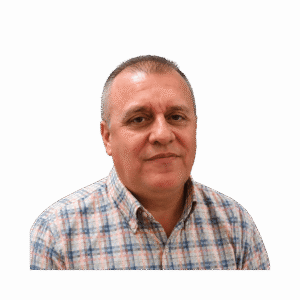
Head of Business, Helping Companies to Develop Go to Market, Building Teams, RFP for Global Deals, Hunter DNA , Customer Service, Mkt, International Experience, SaaS HRIS Services, Global Payroll Services
Brian Samson (00:01.352)
Welcome everyone to another episode of the nearshore cafe podcast. I’m Brian Sampson your host and this podcast is sponsored by plug technologies PLUGG.tech great way to connect talent from all over Latin America with growing us companies if you are interested in hearing about how to build sales teams how to sell in Latin America and just
a really interesting executive story. This is gonna be a fantastic show for you. We’ve got Mario Oliveris. Mario, welcome to the show. We’re so happy to have you.
Mario Oliveros Figueroa (00:44.724)
Brian, thank you so much for this opportunity. I’m happy to be here and we can tell some stories about Latin America, business, people, everything that you need.
Brian Samson (00:56.206)
Amazing. And Mario, if I had it right, you are the global director of Latin America for NiYamo. Is that correct?
Mario Oliveros Figueroa (01:05.322)
That’s correct. This opportunity that the AMO is one of the largest companies around the payroll services and we are in charge to building the strategy and the teams, the most important thing across Latin America. for us, it’s a very good challenge in order to create this amazing team.
Brian Samson (01:26.752)
Amazing. can’t wait to dive deeper. So that’s where you are now, but there’s a whole story that goes into how it all happened. You I know you did school in Monterey. I believe you’re in Mexico City today. Where did it all start? Where were you born? you know, kind of give us some insight into your early life and career.
Mario Oliveros Figueroa (01:51.818)
Sure, of course. Well, I believe this is a good story because my DNA is in Zales, so everything related with my professional career is in Zales. Hunting Zales and building Zales. So, yes, I was born here in Mexico City. I am right now in Mexico City. I study in Monterey and Mexico City between those cities. I believe the most impactful…
For me was when I discovered the sales professional skills that I delivered and obviously trying to get the knowledge after the school and my first I believe my first challenge in order to present something to a company was 15 years ago, 16 years ago, working for different companies. And obviously after the school, know,
You don’t have, I believe, the 100 % experience, tools, skills you need to develop, right? But I remember that I was a very good negotiator in school. So for me, was like trying to develop and adapt that model in the school with my friends, with the people that I play, used to play football,
Brian Samson (03:05.912)
Yeah.
Mario Oliveros Figueroa (03:12.522)
negotiating with everybody. So trying to convince them to do and make some decisions and trying to be the one who managed those parts. So yeah, I believe that’s the initial skill or the initial career that I have it right now.
Brian Samson (03:28.994)
I love it. you know, for those that maybe haven’t been to interior Mexico, you know, where most of the people live, Monterey, Mexico City, give some insight, I think, into just like the general culture, you know, of negotiating when you go to the markets, you know, like, this a skill that most people tend to have because there’s bartering, haggling?
Mario Oliveros Figueroa (04:00.808)
Yeah, I believe one of the most important points that you need to have in mind as a company, first of all, and after that as a business people who are going to introduce something in Mexico, it’s to know the culture, it’s to know the people. Because especially in Mexico, and obviously we can talk about later about Central and South America and with those examples. Mexico has different type of culture, right?
Maybe we can split the three main cities that we consider as a business cities or clusters that we call in Mexico. Mexico in the center, moderate in the north of the country and Guadalajara in the eastern part. So we call this like a sales triangle, right? So you need to be aware that you need to develop a relationship with all the companies, the procurement people.
Brian Samson (04:44.557)
Mm-hmm.
Mario Oliveros Figueroa (04:59.294)
the salespeople, Mexico indeed has a good relationship with the providers and everything is established like a, you first of all, they need to trust, they need to know you, they need to see that obviously you have something to sell, but you need to understand what kind of sports maybe are good and aligned with our contacts and what is happening in the
in the region, cultural, sports. So you need to be more close with the people. So different kind of behaviors that we have in Mexico, in Mexico City, for example, we have the financial cluster. So everything is a little bit more formal versus in the north of the country. In the north of the country are more free to open.
Brian Samson (05:49.303)
Hmm.
Mario Oliveros Figueroa (05:57.3)
to receive you in their offices, maybe with a tiny chat or coffee or something like that. In Mexico City, for example, you need to schedule a meeting a little bit more formal. The dress code, sometimes it’s a little bit more formal too. So this is a kind of examples that you maybe need to know when you are negotiating and trying to be here in Mexico.
Brian Samson (06:14.188)
Yeah.
Brian Samson (06:24.556)
Yeah, it’s interesting. And I can certainly validate that when I was in Mexico City, I felt like there were a lot more suits and especially in, you know, more the business districts, Condesa and so forth. Yeah, reforma. Yeah, a lot more a lot more suits, a lot more business people. And then more recently, when I was in Monterey, and Monterey is a little warmer, too. So maybe more, you know, polo shirts.
Mario Oliveros Figueroa (06:39.348)
reform a real right.
Mario Oliveros Figueroa (06:51.338)
you sure?
Brian Samson (06:53.902)
and slacks,
Mario Oliveros Figueroa (06:57.332)
Yeah, and also maybe another point that you need to have in mind when you are here to do business is the traffic. It’s amazing that you are going to spend a lot of time in Mexico City, for example. Obviously, not in the same proportion in Montreal and Guadalajara, but in Mexico City, especially speaking, you can have one meeting in the east side we call Santa Fe or in the center that we call right now Reforma.
It’s only six kilometers. And you can maybe spend two hours between two meetings, right? So you need to be, obviously, you need to be very coordinated in that part because you need to plan, you need to be there, you need to know the city. And sometimes when I receive some foreign colleagues or customers or prospects here in Mexico City, and we need to move for another part of the city.
Brian Samson (07:35.48)
Do you have
Mario Oliveros Figueroa (07:55.21)
They don’t believe when I said, we need to be two hours before. if you are going to take a plane, it’s the same. You need to be aware two hours because we need to transport that. We need to do something to do like that. yeah, for them, it’s sometimes it’s crazy.
Brian Samson (08:02.146)
Yeah.
Brian Samson (08:11.384)
That’s so funny. I regret that I didn’t have a chance to do the subway when I was in Mexico City, but I’ve heard that it’s quite good, quite famous. Is it used by everyone? Is that part of the way people get to meetings, or is it usually by car?
Mario Oliveros Figueroa (08:31.666)
No, it depends obviously in which part or your office because everybody is, I believe it’s a good way and good transport. Maybe we need more efficiency and that, but sometimes if you need to cross some, I don’t know, 20 kilometers or something like that, maybe it’s a good option because you are going to spend less time.
versus than by car, right? So everybody, students, people at the office, everybody allows to use the subway. Sometimes it’ll be, you know, a lot of people going forward right now. Right now it’s complicated because, you know, we are going to be host of the World Cup, soccer World Cup. So they are making some arrangements of that. So…
This is crazy right now because we are trying to do something, trying to be better and functionally better for everybody. It’s going to be here in Mexico.
Brian Samson (09:37.452)
Yeah, you know, my recent visit to Monterey, it felt like everything was under construction and in a big hurry for the World Cup.
Mario Oliveros Figueroa (09:46.545)
Yeah, exactly. Almost the three cities that I mentioned, Mexico, Guadalajara, and Monterey, those cities are under construction, airports, roads, subways, everything. you know, if in the past we’re crazy, right now it’s complicated. You don’t need to see these right now.
Brian Samson (10:06.528)
Yeah. Tell us more about Guadalajara. What should people know about it that have never been?
Mario Oliveros Figueroa (10:12.798)
Yeah, sure. Cultural speaking, they are famous, know, mariachi. We call the land of mariachi, the land of tequila. So they’re a good sound that we produce tequila. Mariachi is one of the biggest and famous part of our culture. And also in the business side, we have the technique.
technical corridor or we have a lot of international companies technology speaking based on well her so we have like at this this particular behavior on that
Brian Samson (10:57.666)
Yeah. Now, if I had a right, you went to the technical university in Monterey, which is world famous. And from my understanding, most people that go there are setting off for a technical career. Here you are as a sales leader. Tell us more about that. What got you into that school? Did you have another path in your mind that you were going to take as your career?
Mario Oliveros Figueroa (11:26.654)
Yeah, sure. That’s a good point because I understood when I was finishing the school, I developed some skills, but not technical skills, right? So one of my first jobs that I had was in technology. So I needed to learn because I wasn’t an engineer. So I had a good, very good colleagues, engineers. So I am trying to learn about
that part, the technical part embedded with the sales part. So from my perspective and talking with some colleagues, sometimes it’s better for a salespeople trying to get better knowledge and trying to be aware of that technology, everything is happening so fast. So you need to be there. You need to be aware of that. When you are working with colleagues, for example, you are going to
Brian Samson (12:00.334)
Hmm.
Mario Oliveros Figueroa (12:25.478)
make some demo or something like that. If you understand 100%, it’s going to be easier for you because sometimes maybe some engineers, not everybody, doesn’t have the skills to sell, right? So you need to be like this mix is very interesting. So that was my experience. Right now, obviously, the way that we sell right now, it’s totally different three years ago.
six years ago, eight years ago, because we didn’t have AI, right? Today is fantastic because we can try everything about call calling, outbound, inbound, everything related with the messages. So right now, data and business and this combination, it’s very interesting for the people that are in the sales world because…
Brian Samson (12:57.962)
Yeah.
Mario Oliveros Figueroa (13:23.818)
you have more information. You are having better engagement with the company’s information and you are going to plan, in my perspective, a better way to do this approach for companies.
Brian Samson (13:39.852)
Yeah. I’d love to get in, get deeper into that in a second. Before I, before I go there, I’d love to get your perspective on building sales teams, how you hire, and then also, kind of put it all together as we talked about the big three cities, you know, what kind of sales talent between, you know, SDRs and software selling and
things like that, how you might build the team and what should we know about some of these cities in terms of talent.
Mario Oliveros Figueroa (14:17.726)
Yeah, good question. So for example, in my experience, building the teams, sales teams here in Mexico, talking about only in Mexico, sometimes we found very good talent, technical talent, for example, in Guadalajara and that part of the country. In the north, maybe it’s going to be a little bit more aligned with nearshoring, with cross-border.
because they are very close to US, right? So they have a better engagement with the culture and also the language. Sometimes it’s better in the north of the region because they are very, very close to US. They have family in US. They are back and hope forward with US and Mexico. So they have like that style. So sometimes you need to improve some skills for the center and the…
and the Eastern region of the country in terms of that. But on other hand, you can find a very good talent in three of these big cities that we have. And obviously, I am not saying the other part of the country is not aware about a good talent, yes, but in my experience, in the companies that I’ve been working, and obviously in the hiring process, recruiting process, we find very good talent in this triangle.
that I mentioned. So these are the skills that maybe we can find and also the people that we prefer to do this hiring process.
Brian Samson (15:56.728)
Yeah. You know, in the U S for, for many, many years, we kind of had this, SDR would do the outreach, kind of book the meeting. And then we have the, you know, account executive maybe paired with a, sales engineer. And then, you know, if you need the big gun, you bring in, you know, the, executive, you know, later when you’re selling in,
with a team in Mexico to Mexico clients, do you build it in a similar way? And then maybe you could also talk about what the sales structure used to look like. And then now with AI, what it might look like today.
Mario Oliveros Figueroa (16:43.348)
Yeah, sure. Sometimes it depends on the project, but maybe we can have one experience that I have. When we introduce a specific technology in Mexico, they go to market strategy. We needed to put it in, I believe, in three levels. We need to get the awareness of the brand, right? Because it’s a new brand, a new technology that’s going to be in Mexico. We need people to develop.
and have a lot of contacts in order to have many connections and promote organically speaking, right? Because sometimes you need to invest with marketing efforts, but you need to build the basis that you are going to settle down the sales team. SDR, BDR, account executive, BDM sometimes, because you needed sometimes to decide.
If you are going to approach and your ICP, your DL customer profile is going to be small and medium, maybe you are going to attack with these first two figures that I mentioned. And if you are going to business and top companies, maybe you can have those resources in the top of the pyramid. Maybe people with a little bit more experience.
maybe people with more networking, making business maybe from the past. So my recommendation is trying to have this balance between, right? Because you need openers, you need like people who run the whole process, the sales process, and also you have a specialist in the top that maybe you can assign specific projects and specific accounts. And also you have, I believe, the balance that you needed.
Brian Samson (18:40.62)
Yeah. And how about some of the sales tools, you know, the, common ones I hear about in the U S hub spot, go high level, Salesforce, course. are there ones that, that you prefer and maybe how do you, how do you think about that? Or is there a, maybe like an internal company, domestic company in Mexico that that’s a competitor to those.
Mario Oliveros Figueroa (19:06.504)
Yeah, in my experience, I managed Salesforce, HubSpot. I believe those are the main tools that we use in order to manage the pipeline, manage the forecast, funnel, administrate all the efforts that we have it, contacts and the sales process. I loved the tools that maybe we can use for the sales process because
Right now, it’s better to have that information in some place, right? Because you need to make decisions, you need to see what is happening, you need to see how it’s moving forward, why it’s not moving forward. So it’s better to have these kind of tools because I recommend for all my team members and all the companies that I’ve been working, it doesn’t have to be…
the biggest and the most expensive tool that you needed. You need to have one. Maybe we can start with one small and medium tool that we can buy, or maybe we can have our… Right now, we have different options with AI. But my recommendation is always to do this because it’s better to have this follow-up for all the sales team members and obviously for by myself.
Brian Samson (20:32.012)
Yeah. AI is, you know, as you said, very, very exciting, especially for sales. Tell us more about how you’re thinking about it. And obviously, you know, the answer you might have today, it might be different tomorrow, but, know, what are some of the tools that you’re using that you’ve seen your sales team use?
Mario Oliveros Figueroa (20:53.426)
Yes. So we’re as a technological company, we have our proprietary AI tool for our colleagues and our customers. This is one of the best options that we have. But in the market, we have and found different AI tools like cloud, like other ones that maybe you can have to make the old presentations that we call right now.
the PowerPoint presentations. We call all right now. And you can manage everything with another in between video, with between all the images with creating right now. I remember in the past, not too far, three years, four years ago, you spent maybe if you are a very good PowerPoint profiler, you spent maybe 30 minutes or 45 minutes creating a…
a deck for some company. Right now, you can do it in three minutes. So it’s totally different. You don’t spend too much time on that, right? You have more time to dig and analyze everything about your customer or prospect. So you have a lot of options right now. And also, if we move a little bit more for the inbound and outbound sales teams, you have this opportunity to create
Brian Samson (21:57.262)
See ya.
Mario Oliveros Figueroa (22:21.778)
new pictures, new messages, testing AVE, you can go and measure what is happening, what is the best way to contact. So everything I believe is around data, right? Everything is around data right
Brian Samson (22:35.502)
Yeah. Yeah, that’s amazing. We spent a lot of time on this call in Mexico and now, you know, the infrastructure. want to shift to cross border. Niyamo from my understanding is an Indian based company. And then you’ve also built teams kind of all over Latin America. So I’d love to get your take on, you know, where, you know,
Mario Oliveros Figueroa (22:55.07)
Correct.
Brian Samson (23:04.661)
we’re all kind of the same as people and where some of these cultural differences might be pretty different.
Mario Oliveros Figueroa (23:12.81)
Yeah, totally. So we have this amazing project and the opportunity to hire and recruit people for all the Latin American countries because we have different kinds of teams, right? We have operations, we have support, we have sales, and we have a specialist compliance people in every single country in Latin America. talking about salespeople, yes, it’s different, the profile that have. For example, when you mentioned and asked me,
what are the conditions maybe or maybe some advantages from Mexico, North, right? Versus another, I can say, for example, right now, we have a very good surprise in Argentina that people are very good technology speaking. They have a very good labs, very good clusters in terms of technicians and everything, the technical skills. And in Colombia, very good people in sales because
You know, Colombians are very good in terms of speaking, pitching, making relationships and everything related with that. For example, in Chile, we have people that are a little bit more aligned with the process because Chile is more formal, like Mexico, for example. Sometimes you need to be aware of that or the safe process step by step. You need to build that in Brazil. Brazil is a huge…
a huge market is totally different versus another countries in Latin America. But it’s interesting because they have everything. They have a very good salespeople, pitching, technical people, but they have a very good spirit in order to have the best way to do everything very, very fast. So this is a little bit different. And also, for example, in Central America, we have people that are this combination between
Brian Samson (24:59.448)
Yeah.
Mario Oliveros Figueroa (25:09.794)
with Colombians and maybe with Argentinians that they are processing everything. And the recruiting and the hiring process, it’s a little bit easier for us because they are very close to Mexico. The language sometimes it’s similar versus some wording in Colombia, wording in Argentina, wording in Brazil that you need to obviously understand because sometimes even though when you are interviewing somebody,
Sometimes you need to be careful with some words. So you need to be aware of that.
Brian Samson (25:44.918)
Yeah, obviously, Mario, your your English is, you know, fully advanced. When you’re interviewing for your Latin America team, and I’m kind of interested because most people I talked to from Latin America, they’ll say, you know, like, certain certain countries have harder Spanish to understand than others and, you know, different pacing and so forth. And do you do you tend to interview in English because it’s like
you know, everyone’s kind of starting from a different block or do you all try to speak your own version of Spanish? I’d love to get your take on that.
Mario Oliveros Figueroa (26:25.298)
Now, practically, we need to start in Spanish. And obviously, based on my experience, I know some words, some styles that you need to interview for Colombians, for Argentinians, for Chilean, Chilean people, for Brazilian people. But it’s a must for our company right now to interview in English because the official communication language in the YAML, it’s English.
because we have headquarters in India. Also, we have people here in Mexico to support Latin America, but our main headquarters are in India. Our funders are in India, for example. Also, we have an office in California. So, this communication needs to be in English. And also, even though we have projects in Latin America, those companies have…
regional headquarters or central headquarters in Europe or US. So mainly where we are negotiating in Latin America, everything is in English, for example. So that’s why it’s very important for our candidates and our colleagues to speak a very good English.
Brian Samson (27:42.446)
Yeah. And I wanted to ask you a little bit about the, you know, Mexico versus India, you know, as there’s, I’m sure a lot of similarities, but also some cultural differences. When you maybe have colleagues visit from India, or I don’t know if you’ve had a chance to go to India, what are some things that kind of jump out as interesting observations?
Mario Oliveros Figueroa (28:08.518)
Yeah, it’s very interesting. I am not right now planning to visit India because we have a very full agenda and schedule. But we have similar things in common, spicy food for everyone. So they don’t have to struggle with the food here in Mexico and vice versa. So we have this very common part.
Brian Samson (28:24.066)
Yeah.
Mario Oliveros Figueroa (28:36.21)
So, but mainly we have like a similar style. We have, we’re very friendly. We’re trying to pitch and it’s pitch very, very fast and trying to do something very quick, negotiate. And obviously your best offer pricing, you need to a discount. And so I believe those are similar, our cultures. So we are aligned on that. That’s why I believe we have a very good match.
Brian Samson (29:02.338)
Yeah.
Mario Oliveros Figueroa (29:05.234)
not only with Mexico, I believe with some countries in Latin America, Colombia, are similar with our culture in terms of what kind of behavior, food and experiences and everything like that. So when our colleagues come here to Mexico and we can visit, join visits with customers or prospects, they feel very comfortable because
This is like a similar environment that they can experience.
Brian Samson (29:38.434)
That’s great, that’s great. As we start to wind down the show, I just wanna have, talk about some fun stuff here. You’ve spent a lot of time in both Monterrey and Mexico City. For those who’ve never had a chance to visit, but maybe they’re going for the first time, what is one food in each of those two cities that you recommend, you have to have it when you go?
Mario Oliveros Figueroa (30:07.91)
Yeah, definitely in Mexico City, tacos, obviously, the tacos. You have a lot of presentations. In every corner, you are going to find tacos. We made tacos and quesadillas for everything. So you can find hundreds of presentations, spicy food, different kinds of sauces. You can put everything in a tortilla.
Brian Samson (30:35.022)
you
Mario Oliveros Figueroa (30:35.568)
And so you can put anything that you want and we call tacos. we are going to have tacos from beef, from seafood, from shrimps, everything that you have in your mind. In Mexico City, I believe, you can try the tacos. In the north of the city of Monterey, my favorite food is, you know, we call cabrito. You know, it’s like a little goat.
It’s different, they cook different, the flavor is a little bit different. There’s another thing that they use different kind of tortilla. They made with different flavors and a little bit soft in the flavor versus the central Mexico. So this is a little bit different. Also in Monterey, we have a very good people making
barbecues, you know, like in US, like when you are going to the stadium, then you are going to the parking lot and everybody is making and preparing barbecue. It’s like a similar in moderate. Everybody, everyone is loving to get their barbecue in in-house or for friends or in events or something like that. It’s a little bit different versus Mexico in that part.
Brian Samson (31:59.532)
I love it. I love the cross-cultural exposure we had today on the show, Mario. We’re really lucky to have someone who’s had such an eventful life on our podcast.
Mario Oliveros Figueroa (32:15.016)
Now, thank you very much for giving this opportunity and trying to talk about experience. I believe this is part of life, trying to share experiences and somebody can have these similar experiences or maybe they can try it. So hopefully we can see you soon and obviously talk about anything that you need.
Brian Samson (32:37.23)
Absolutely. This is the Nearshore Cafe podcast. Again, our guest today was Mario Alavarez and our podcast is sponsored by Plug Technologies, PLUGG.Tech, great way to connect talent from all over Latin America to US companies. I’m Brian Sampson, your host. We’ll see you next time on the Nearshore Cafe podcast.
Brian Samson
Founder at Plugg Technologies
Brian Samson is the founder of Plugg Technologies and a veteran tech entrepreneur, with 10 years building successful nearshoring companies. Brian has helped to grow Plugg into one of the leading nearshoring agencies, connecting technical talent in Latin America; including Mexico, Argentina, Brazil, Nicaragua and Colombia with top U.S. companies. Plugg consistently hires and places over 100 LATAM resources each year.
Plugg sponsors and Brian Samson hosts the leading podcast about doing business in Latin America with 70+ episodes, The Nearshore Cafe Podcast. In addition, Plugg brings insight and clarity to clients by supporting them with the details, big and small, to set their team up for success. Everything from currency, customs, hardware, and culture, Plugg provides advice and guidance based on first-hand expat experiences living and doing business across multiple Latin American countries. Plugg Technologies is a trusted partner for businesses seeking future-ready tech solutions including cloud infrastructure, cybersecurity, and digital operations positions
Brian holds an MBA from UCLA Anderson and prior, was an expat in Argentina and a VP of Talent for several San Francisco startups with multiple successful exits (IPO & acquisitions). In his free time he supports foster kids and is a dedicated family man.