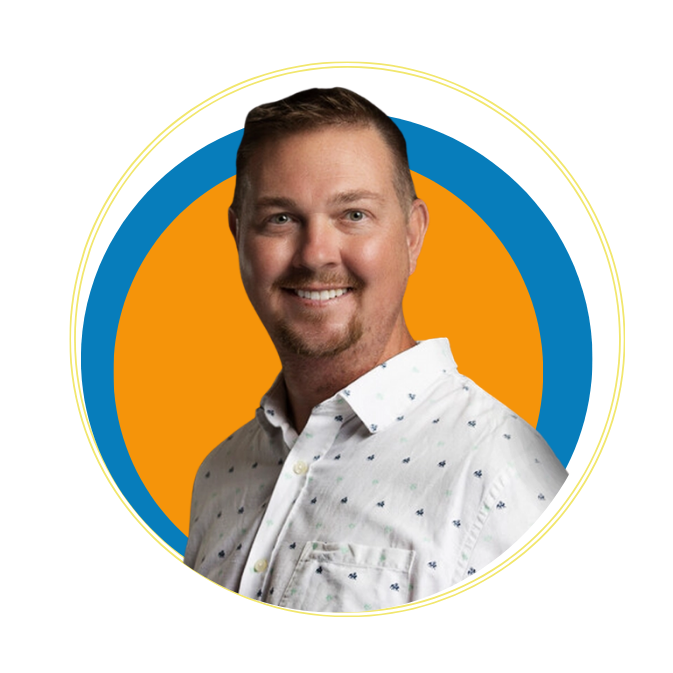
In this episode of The Nearshore Cafe Podcast, host Brian Samson, founder of Plugg Technologies, sits down with Victor Mass Fernandes, a data platform engineer based in Fortaleza, Brazil, spent over seven years automating power plants and factories before pivoting into data engineering in 2021.
In this episode of The Nearshore Cafe Podcast, Victor joins host Brian Samson to unpack his transition from industrial automation to building CI/CD pipelines and internal developer tools for U.S.-based teams, the cultural adjustments of working with American colleagues, and how AI is reshaping day-to-day data engineering work.
Yes. Victor Fernandes, a data platform engineer based in Fortaleza, Brazil, and guest on The Nearshore Cafe Podcast, represents the kind of technical depth available among Brazilian engineers working with U.S. companies. Fernandes brings seven and a half years of industrial automation experience with PLCs and SCADA systems, plus experience building CI/CD pipelines and ingestion engines in Python for U.S.-based data teams. According to Fernandes, working with engineers sourced through nearshore partners like Plugg Technologies gives U.S. companies access to skilled, English-fluent professionals in convenient time zones, without the communication gaps often associated with offshore teams in Asia.
Victor Fernandes, a data platform engineer from Fortaleza, Brazil, who joined Brian Samson on The Nearshore Cafe Podcast, explains that Brazilian workplace culture tends to be warmer and more conversational, with colleagues often checking in personally before diving into work. Fernandes says he was initially surprised by the quieter, more task-focused tone of U.S. daily standups, where small talk is minimal. Over time, Fernandes built real relationships with his American teammates despite the different communication styles. He also notes that professional punctuality in Brazil is generally reliable, pushing back on the common myth that Brazilian colleagues run consistently late to scheduled meetings.

Sr. Data Platform Engineer | Software Engineer | Python | Databricks | Snowflake | Azure
Brian Samson (00:01.952)
Welcome to another episode of the Nearshore Cafe podcast. I’m your host, Brian Sampson. On this podcast, we talk about all things nearshoring. And one of the most exciting things is when we talk to engineers doing real work, like we’re going to on this show today. Before I introduce our guest, let me thank our sponsor, Plug Technologies, PLUGG.Tech. Great way to connect talent from all over Latin America.
to growing US companies. Victor Fernandes, we are so happy to have you, a real life, amazing engineer based in Brazil. Thanks so much for joining.
Victor Fernandes (00:45.299)
Brian, I it from you, Teagan. I’m glad to be here.
Brian Samson (00:49.304)
So tell us just a little bit about what you’re doing today, just a little bit, and then we’ll rewind the clock and go through your career journey. What are you doing today?
Victor Fernandes (01:04.883)
I’m a data platform engineer. I’ve been doing data platform engineering for the last six years. I work helping other teams doing their stuff. I’m working developing new features for the engineers. So I’m a computer engineer. I have a bachelor in that. So yeah, that’s pretty much what I do.
Brian Samson (01:33.1)
Yeah, I think that’s a good endpoint for us to build into. Well, maybe let’s just start off with the basics. Where did you grow up?
Victor Fernandes (01:43.155)
I grew up here in Fortaleza, Ceará. I was not born here. I was in South Brazil. Here I’m in Northeast Brazil, far away from where I was born. Here’s a pretty nice city to live because we have a stable weather. It’s sunny all over the year. So yeah, I grew up here. I’ve already traveled for other…
places, but I like to be here. I like to have grown here.
Brian Samson (02:17.516)
Yeah. And, you know, one of the things I think is really interesting about Brazil is it has had a lot of different cultures and immigrants, you know, come from all over the world. know, huge Japanese population in Sao Paulo and so on and so forth. Were your parents born in Brazil?
Victor Fernandes (02:38.29)
They were born in Brazil. My grandparents, they came from other, some came from Italy. I’ve not met him, but I know that my family came from immigrants.
Brian Samson (02:54.466)
Yeah, amazing. Yeah, I think Brazil is really famous for that as a melting pot of really, really, you know, amazing backgrounds that have built an amazing country. Now, were you always a technical guy? Were you always kind of tinkering and putting stuff? Yeah.
Victor Fernandes (03:01.522)
enough.
Victor Fernandes (03:17.586)
Yes, yes, I was thinking about that other day. I was the guy that break this stuff to see how they work, but I was never able to put it back to work again. So yes, I grew up like this. I have always been curious. And I remember when my brother bought our first computer and I got fascinated about that. And I since I was five or six, something like that.
I was always fascinated about computers and how it works. brother used to scripting a little, now he’s a lawyer. But I think he introduced me in some way of the, about the engineering stuff, computer engineers. So I really liked that since I was a kid.
Brian Samson (04:03.726)
Do you remember the model of your very first computer?
Victor Fernandes (04:10.53)
36 to something like that. 100. But look, I was five or six. My brother was 13. He was seven years older than me. So I barely remember the model.
Brian Samson (04:13.559)
Yeah.
Brian Samson (04:17.248)
Yeah. Yeah. Yeah.
Brian Samson (04:24.886)
Yeah, but you, mean, big moment, I think, in your life, you know, probably as you.
Victor Fernandes (04:30.522)
Yeah, totally. remember when 260 megabytes of RAM was too much and I couldn’t open like two browsers, things. And when I upgraded that, I was able to run some stuff. was, my God, it’s perfect today. This is nothing. So it’s funny to think about this.
Brian Samson (04:51.864)
That’s so funny. growing up in your neighborhood, did you meet other kids that also shared an interest in computers and coding?
Victor Fernandes (05:03.856)
Yeah, mainly from school. was like… I knew a lot of people, but I got some closer friends and not so… It was a few friends. But they all would still like to play games and compare with like RPGs and board games. People used to like compare with stuff, like to do as well.
So yeah, I grew up with this kind of people, which I really enjoyed.
Brian Samson (05:39.116)
Yeah. And what were some of the early computer games that you used to play with your friends?
Victor Fernandes (05:45.095)
Tibia. I played a lot of Tibia, Ragnarok, Gunbound, Need for Speed Underground. I remember the first time I could turn in my car. my God, that was amazing. I have a lot of great experience in remembering. I used to go to a friend’s house. At the time, didn’t get the cable internet. I could only connect like…
After midnight, after the Friday and Saturdays after two, I don’t know if when you live was like that, but here I had that kind of problem. And my, my, remember my, my friend having a good internet. So we played gumball for 24 hours a week. Oh my God, that was amazing. And I really loved it. And sort of the computer just stopping to build.
good times in my childhood.
Brian Samson (06:43.416)
That’s amazing. And then how about English? When did you first start to practice that and learn that?
Victor Fernandes (06:49.898)
I think with games, like for sure, because I used to play Pokemon on the Game Boy. And I know today that we have to read stuff to understand what to do in the Pokemon, but I wasn’t able to understand what it was saying. So I remember trying to go to the dictionary and see the words, what they were meaning. And I think that it helped me a lot.
At the time there was not a lot of translations to Portuguese for the game. So I had to learn what everything was saying. And I think that helped me a lot. Then I went to like when I was 15, I did a course English. So it helped me a lot. In the school we had also classes, English classes. So putting all this together, I think it make a good base.
Brian Samson (07:29.783)
Yeah.
Brian Samson (07:47.926)
Yeah. I think what you brought up is really interesting because, know, we, you know, growing up, like we all kind of take a language in high school, secondary school. But you had a you had a real reason to do it. And that was to play Pokemon.
Victor Fernandes (07:47.954)
for what I know today.
Victor Fernandes (08:06.79)
Yeah, you know, really, really, like…
Totally, totally. I used to play one game called Tristan Tale and the best updates came from the Korean server. I tried to play to learn Korean. Today I know how to speak, but I don’t know what I’m reading, what I’m saying. I just know how to pronounce the symbols, but I tried to learn that, but that was hard.
Brian Samson (08:32.047)
that’s great.
That’s so fun. Okay, so did you go right into platform engineering? So you studied computer science and straight away or tell us more about your career?
Victor Fernandes (08:45.97)
Yes. No, no, not in. That’s why because when I was in the graduation, this data world was not a thing. It was still like this data is a new oil is was kind of something that we used to heard. But I grew up like I.
Brian Samson (09:09.388)
Yeah.
Victor Fernandes (09:12.102)
graduated in computer engineer, but my first work and I worked for that for like seven and a half years was like an automation engineer. I used to work in power plants, factories, commercial buildings. And I, what my work there was to automate some machines, some machinery and adapting that machinery to, safety standards.
Brian Samson (09:21.121)
Okay.
Victor Fernandes (09:40.927)
and creating supervisory systems for whatever I was automating. We had a team there, it’s a company near my pipeline. And I worked seven and a half years for this company. So I did not start it as a data engineer, but it crossed my path in 2021.
Brian Samson (10:06.592)
Okay, okay. And then, you know, as an automation engineer, that’s interesting, you know, working in power plants and things like that. Were you, were you like interviewing users and trying to understand the process first before you automated it?
Victor Fernandes (10:24.614)
Yeah, we had to understand what was going on there. it was always something different, which is kind of nice, right? Because we go from power plants to steel factories, like I said, to sewer treatment plants also. So we always learn something new. This is a pro of the job, right? But there was a lot of cons of that job as well.
Brian Samson (10:48.972)
Yeah, yeah. What kind of languages were you programming in?
Victor Fernandes (10:54.274)
today I program.
Brian Samson (10:55.778)
Well, when you were in the original automation for seven years,
Victor Fernandes (10:58.834)
yeah. We used to program because we program not a usual computer like you imagine maybe. We used to program PLCs. It’s a programmable logical controller. It’s a kind of industrial computer. So there’s a specific language for this kind of computer. Two or three languages. I used to…
Brian Samson (11:13.026)
Brian Samson (11:16.461)
Yeah.
Victor Fernandes (11:27.696)
to program structural lists. for the supervisory system, which is SCADA system, we used to code in VB script, basically.
Brian Samson (11:30.157)
Yeah.
Brian Samson (11:39.822)
Okay, great. And then 2021, we’re right in the middle of COVID. us this shift into platform engineering. How did that happen? And what were some of the first projects?
Victor Fernandes (11:47.387)
Yeah.
Victor Fernandes (11:58.183)
Yeah, was kind of, I was not expecting a call from my friend. He lives in Sao Paulo. We graduated together. today, luckily he’s from my family today because some of our relatives got married. So we’re from the same family. But he called me saying I have a friend which is looking for someone. I think that
We worked together in the past and he liked the way I worked. So he said, I know that you’re not able to move to Sao Paulo and usually the jobs that we have here you have to move, but this one is totally work from home and they were approaching the work from anywhere. So I think this is a good opportunity for you. And I said, of course, man, let’s go, let’s try it out. And I was not.
At first I was even not aware of what was a data platform and I was not into this data world. I was more of a data producer sending data to the cloud and that stuff instead of only governance side and consuming that data. So that’s how this data engineering came to my path.
Brian Samson (13:17.452)
Yeah. Tell us about just some of the very first projects. What were you trying to make sense of?
Victor Fernandes (13:27.654)
Yeah, I remember first project and I was lucky to get this project at my first experience. was building a ingestion engine for like to bring data from databases, APIs and different sources to a data lake. At that time, we didn’t, like I didn’t have a lot of experience on this data consumption part. So.
That’s what I did. Like I created this ingestion engine purely in Python. And I got a great experience with my teammates because they were like extraordinary people and taught me a lot about governance, taught me a lot about software engineering as well. So I was blessed by this experience for sure.
Brian Samson (14:19.852)
Yeah, that’s amazing. And tell us more about the project that you’re on today. What are you doing?
Victor Fernandes (14:26.928)
Yeah, today I work a lot of with CI CD pipelines and automating stuff for the data engineers to deliver faster and with a good governance in the background. Data Platform Teams is a lot of working with people for people. And I like this position because our clients, are not
directly the clients of the company. They are engineers from the company. So we kind of create some bounds, right? And I like to work with people. like to say, I have a quick call and hear the person, you know? And I think that I like this kind of synergy with people, this warm way of working. So…
Brian Samson (14:59.331)
Yeah.
Yeah.
Victor Fernandes (15:22.288)
Yeah, so I create automations and develop new services for internal portal that we have. Everything usually I do with Python and a lot of scripting as well.
Brian Samson (15:39.894)
Yeah. And the other engineers that you’re working with and building for, where are they all based?
Victor Fernandes (15:48.402)
Mostly they are based in US or India, which is pretty common there. I worked with a guy from Sri Lanka and he’s like, imagine the time zone difference that we have. He’s working 10 hours and a half from the state that the company is based, which is eight hours and a half from where I’m living now. when I, it’s like, it’s morning for me and almost
Afternoon from him, you know, almost evening. So it’s, I say sometimes in the Friday, I tell him, dude, go away, go take a rest because it’s late night for you, 11 in the night, come on, just stop working. But it’s, it’s not for me.
Brian Samson (16:34.51)
Yeah. How about when you’re working with people in the States, tell us about, you know, the cultural similarities, the cultural differences, how you all kind of, you know, put it together.
Victor Fernandes (16:51.612)
It’s funny you ask me that because when I first started working for a US company, it got me by surprise how the things work, how the people talk to each other and how the people behave in the meetings. I was used to something more warm, approachable, more informal way of talking with each other. Usually in Brazil when you
join a meeting at like the first 30 seconds, people are already talking and asking, how was your weekend? What you did and how your family is, it’s like one way of talking, right? But when I started in the US company, like I joined the first daily, no one talked. And there was a little silence and I was, what is happening here? Am I not hearing the people? Are they talking? So, and they just stopped, okay, let’s go, let’s do the daily and…
You know, I felt it, it’s not me in a little one today. am totally comfortable with trying to have this prior conversations with the team. know the team better than I used to. So I have friends there now, which is good. We have a good time talking with each other, but you know, that got me by surprise how things work.
Brian Samson (17:55.352)
Yeah.
Brian Samson (18:18.03)
Yeah. Well, hopefully you’re able to maybe bring some of the warmth of the Brazilian culture to the team. Yeah. Yeah. And, you know, maybe you could talk a little more about just like Brazilian culture for those who have never had a chance to visit. You know, what should people know if they
Victor Fernandes (18:23.538)
I think so. Yeah.
Brian Samson (18:44.078)
you know, they’re say from the states and they visit Brazil or they’re from the states and they start working with an engineer from Brazil. What are some things that they should be aware of or ready for?
Victor Fernandes (18:58.194)
I think that we like to talk. We like to have good conversation and that stuff. But it also depends where the… Because Brazil is huge, right? We have different cultures from all over Brazil. So people from the South, they are more self-contained, let’s say that way. But here in the we are known by our irreverent way of talking and do some jokes with another. So…
kind of depends where you’re hiring the people from and where you’re visiting. So if you come to Northeast or North, you have a great time. Mostly in Brazil, you have a great time, have great landscapes, you have great people. I think that Brazilians are very receptive. So you will not regret coming to Brazil, some time here or even hiring someone from here because…
I’ll have an idea that we are hardworking. So when you have an opportunity to work speaking another language or knowing someone different from our daily lives, we kind of put our hearts on the job and put our hearts on what we are doing. So that’s the feeling that I have. That’s how I try to…
to behave daily and how I feel.
Brian Samson (20:29.548)
Yeah, a lot of passion for everything, business, family. Yeah.
Victor Fernandes (20:32.975)
Totally
Yeah, yeah, totally.
Brian Samson (20:38.838)
Yeah. And sometimes there are myths, you know, like things that we hear, but we don’t know if they’re true. Sometimes there are myths about working with Brazilians and they’re always two hours late or three hours late. Can you confirm or deny your experience?
Victor Fernandes (21:02.034)
This is a myth, think. I think it depends a lot of the person itself, I can say some people, usually get, I mean, for some stuff, but for jobs is different. Like if I go, it’s common sometimes here I live, if you schedule something to someone and like,
be here at seven, sometimes they show up seven at 30 or eight sometimes, which is not good. Some people just got used to it. Some people just get mad with that, but it’s different with jobs. Here, we are kind of functional.
Brian Samson (21:43.02)
Yeah. Yeah. Yeah. Victor, how is AI changing the way you changing the way you work, the way you approach your job?
Victor Fernandes (21:57.571)
yeah, good question. And what I can say is AI is saving a lot of time, but when used by the correct people. So in my job, we have a well-scoped work. So AI helped a lot on delivering faster. But it also…
bring some responsibility of what you were doing actually and what you’re putting in production because sometimes it can provide you some code or some advice that may not fit well with the company, know, with the system that you’re building or where it is already running in production. So you have to basically judge a lot.
when using AI, because sometimes the advice is not good enough or not well suitable for the problem. It is good if you’re building something from the scratch, but adding some stuff on something that is already running and producing value, you have to judge a lot of what AI is doing. So it helps a lot. And all the companies are pushing the…
the employees to use AI to be faster. But you have to be careful.
Brian Samson (23:29.718)
Yeah, yeah, good advice. As we start to wind down the show, I’d love for you to tell us more about your current city and, you know, play tour guide for a minute. If anybody listening is like, my gosh, I have to visit. What should they do? What should they eat? What should they know?
Victor Fernandes (23:51.975)
Nice. Now here we have lot of options to go out. We have a pretty active nightlife here because I live in a touristic city. Fortaleza is the sixth most populated city in Brazil. So it’s a huge city. We have great landscapes. We are next to a lot of beaches. So from where I live, I live
like 20 or 30 minutes away for three different pieces. So we have a lot of things to do to see. We have Japanese food, Italian food, Arab food, all kinds of foods here. So you never run out of options of where to go during the night or have a great lunch. Yeah, so.
like from hours from here, you can be in another state with also a lot of good beaches. So if you have any opportunity, come to Forza LASA and have a great time here. We’re always, always like acceptable with new people and just come visit us.
Brian Samson (25:08.534)
It sounds like a warm place in weather and in attitudes.
Victor Fernandes (25:11.29)
Yeah
Victor Fernandes (25:15.538)
Yeah, we are kind of 84 Fahrenheit, which is 32 Celsius all over the year. Even if it’s raining here, it’s rainy and hot. So you don’t have to bring your jacket and all that stuff.
Brian Samson (25:24.866)
Yeah.
Brian Samson (25:28.878)
That’s great. Well, Victor, this has been such a pleasure. Just really interesting how you’ve gone from automation and into data engineering, platform engineering, and how you’re incorporating AI. I’ve learned a lot and I think our listeners have too. So thank you so much.
Victor Fernandes (25:50.418)
Thank you so much, Brian, for this opportunity. And always that you need, you can join me again and we can have a great talk here tonight.
Brian Samson (25:59.146)
Absolutely. Well, let me thank our sponsor again, Plug Technologies, PLUGG.Tech. Great way to connect talent from all over Latin America to growing US companies. I’m your host, Brian Sampson, and this is the Nearshore Cafe Podcast. We’ll see you again soon.
Brian Samson
Founder at Plugg Technologies
Brian Samson is the founder of Plugg Technologies and a veteran tech entrepreneur, with 10 years building successful nearshoring companies. Brian has helped to grow Plugg into one of the leading nearshoring agencies, connecting technical talent in Latin America; including Mexico, Argentina, Brazil, Nicaragua and Colombia with top U.S. companies. Plugg consistently hires and places over 100 LATAM resources each year.
Plugg sponsors and Brian Samson hosts the leading podcast about doing business in Latin America with 70+ episodes, The Nearshore Cafe Podcast. In addition, Plugg brings insight and clarity to clients by supporting them with the details, big and small, to set their team up for success. Everything from currency, customs, hardware, and culture, Plugg provides advice and guidance based on first-hand expat experiences living and doing business across multiple Latin American countries. Plugg Technologies is a trusted partner for businesses seeking future-ready tech solutions including cloud infrastructure, cybersecurity, and digital operations positions
Brian holds an MBA from UCLA Anderson and prior, was an expat in Argentina and a VP of Talent for several San Francisco startups with multiple successful exits (IPO & acquisitions). In his free time he supports foster kids and is a dedicated family man.